
The Enlightenment is often described as a movement valuing individualism, scientific progress, reason, and equality. However, by highlighting individual achievement, this view tends to minimize how collaboration and unequal labor made the advances of the Enlightenment possible. The household of siblings William Herschel and Caroline Herschel is a strong example for rethinking the hidden work that supported scientific progress. Before they became known for their work in astronomy, William was a skilled musician, and Caroline was a professional singer. Their later discoveries in astronomy were not separate from their musical backgrounds; indeed, their experiences in music had a strong influence on their scientific work. The Herschel family hailed from the German territories, specifically Hanover, before William relocated to England in the mid-1750s and later brought Caroline to join him. This transition from German musical training to professional life in England placed the Herschels within a vibrant cultural environment where music functioned as both artistic practice and a form of disciplined labor.
This article examines the lives of William Herschel and Caroline Herschel within the context of Enlightenment knowledge creation, focusing on how their work in music and later astronomy was affected by the structure of their household. It asks how knowledge was produced within this household, paying particular attention to who was doing the work behind the scenes and how recognition was shared (or not). I argue that scientific progress in the Enlightenment depended not only on individual insight, but on collaboration and unequally acknowledged labor. Musical training played a central role in this process: It shaped habits of discipline, repetition, and attention that later led to scientific thinking and observation. By examining the Herschel household’s activities in both music and astronomy, this article demonstrates how knowledge was produced through structured, collaborative practices that were deeply informed by gender.
Musical Training and Intellectual Formation
The careers of William Herschel and Caroline Herschel were thoroughly embedded within the musical culture of the Enlightenment. Their father, Isaac Herschel, was an oboist and fostered a musical environment for his four sons and two daughters. All four sons of the Herschel family initially sought careers in music. Expectations differed for the daughters, however. For instance, Caroline’s mother strongly opposed her receiving an education.
Caroline’s difficult childhood further constrained her already limited prospects. She suffered several illnesses that left permanent physical effects, including smallpox at the age of three, which disfigured her left eye, and typhus at the age of ten, which left her at a height of 4’3”. As a result, her mother considered her unfit for marriage and better suited to domestic labor.1 Despite this, Caroline’s father played a crucial role in encouraging her education and intellectual development. Once he passed away, the eldest Herschel son, Jacob, took over as head of the family, and he was extremely cruel to Caroline. He was said to be a great musician; however, he would harshly demand that Caroline perform tasks around the house, and oftentimes would whip her. She did not want to endure this treatment for the rest of her life, so she took matters into her own hands and began to take classes to become a governess. Once William heard what was happening back in their hometown of Hanover, he moved Caroline to Bath, England, where he was based at that time, so she could become his housemaid.
In 1772, at the age of twenty-two, Caroline moved to England, where she remained until William’s death in 1822.2 Caroline was initially under the impression that she would receive singing lessons from her brother; she was unaware that he had begun to pursue a new pastime, astronomy. Caroline still trained as a soprano (and dancer) whenever she could, and she did so well for herself that after a performance in Handel’s Messiah, which William was conducting, an audience member offered her a prestigious role to sing in a festival in Birmingham. Feeling indebted to William for bringing her to England, she declined the offer, because she felt the need to help her brother achieve his own professional goals and also did not intend to sing in performances for which he was not the conductor.3
In the Herschel household, music was a central force that guided the intellectual framework and daily routine of the family. Once Caroline and William moved from Germany to England, their professional activities in music evolved, and their domestic life often involved rehearsals, lessons, and performances, which reflected the Enlightenment ideals of discipline and self-improvement through the arts.4 Music provided Caroline a crucial avenue to education. Her training in singing and notation cultivated a technical skillset and led her to engage with society at large both socially and intellectually. As Gabriella Bernardi argues, musical training enabled Caroline to move beyond pure domestic labor and participate in a more intellectually active life, albeit still within the confines of traditional gender roles.5
Music also functioned as the family’s primary source of income, particularly through William’s public concerts and teaching. Caroline contributed as a performer, personal assistant, and household manager, taking care of domestic responsibilities while William composed, conducted, and taught. The labor Caroline performed is of a kind that is often overlooked, yet it proved essential to enabling William to pursue his professional ambitions.
At the same time, music informed how the Herschels understood Enlightenment ideas. In the eighteenth century, music, like the natural world, was conceived as a system built upon on natural and mathematical order. As Deirdre Loughridge explains in her discussion of “celestial mechanisms,” music was often compared to the structure of the cosmos, where harmony and balance revealed underlying laws.6 In this way, engaging with music, through either performance, composition, or rehearsal, became a way of working within a philosophically organized system of knowledge. In the Herschel household, this meant that music informed not only daily routines but also ways of thinking. Repetition and careful listening encouraged attention and control, both of which were also closely tied to Enlightenment ideals. For the Herschels, music was a way of learning how to recognize order and engage with structured knowledge. In other words, music offered a means by which Enlightenment ideas were brought into the Herschel household, shaping how they were practiced in everyday life.
From Sound to Stars
During the siblings’ residence together in Bath, William’s interest in astronomy grew. While Caroline remained more committed to music and continued with her dance and voice lessons, William’s shifting interests gradually affected her path as well. In response to her brother’s changing vocation, Caroline began studying subjects such as trigonometry, algebra, and geometry, so that she could support William’s observations and help record his findings.7 After William had invested in telescopes and further academic lessons to broaden his knowledge of astronomy, he discovered the planet Uranus in 1781, and the King of England gave him a yearly salary of two hundred pounds to continue his research. Although this was less than what he had previously earned as a musician (three hundred pounds a year), it marked a turning point in his career and solidified his commitment to astronomy.8
Bernardi relates that once William proved himself to be an avid and successful scientist, “Caroline then abandoned her singing career with much regret, because music, in her opinion, was her true and only vocation.”9 Caroline did not have the privilege of choosing what she really wanted to do. She felt indebted to her brother for bringing her to England, and because he provided her access to education, she felt compelled to follow his professional path. However, the transition from music to astronomy within the Herschel household was supported by the similarity of their underlying methods. Both disciplines required close attention, accuracy, and commitment to repetitive labor. Each of these qualities were originally cultivated through William and Caroline’s early musical training. For example, William cataloged and organized large amounts of data, activities which Rachel Cowgill and Sarah Waltz compare to structuring musical compositions. Moreover, Cowgill and Waltz suggest that his ability to identify patterns within the night sky can be traced back to his skill in recognizing relationships between tones and harmonies.10
Caroline’s role in this process further highlights the connection between musical and scientific practice. She recorded observations, kept logs, and assisted with calculations, all of which required precision and focus similar to musical performance, where timing and accuracy are fundamental. In her memoir, Caroline describes the intensity of this work, including long nights spent assisting her brother under physically demanding conditions.11 Michael Hoskin and Brian Warner’s study of Caroline’s comet discoveries emphasizes how structured her work came to be. “Sweeping” the sky involved steady, repeated movements and careful attention to detail. This process required both physical stamina and mental focus, as Caroline worked through the night recording her observations. These practices closely resemble musical rehearsal, where repetition and discipline are necessary to develop skills over time.12
Like a musical performance, astronomy in the Herschel household was a collaborative process. William operated the telescope while Caroline recorded data and ensured its accuracy. This division of labor made their work highly productive, but it also reinforced the hierarchy within their partnership. As Hoskin notes, Caroline’s role was defined by a balance between dependence and independence.13 She became highly skilled and made her own discoveries, but her work was nonetheless closely linked to her brother’s authority. This reflects a broader pattern in Enlightenment science, where collaboration was essential but acknowledging collaborators was not. Ultimately, the Herschels’ shift from music to astronomy demonstrates how skills and methods can move across different fields. It also illustrates how practices developed in one area can influence work in another, attesting to the interconnected nature of knowledge during the Enlightenment.
Invisible Labor and Gender Roles
Caroline Herschel’s contributions brings into focus how important work could be both essential and undervalued during the Enlightenment. She performed many tasks, such as recording observations and helping with telescope operation, but her efforts were often seen as less significant than her brother’s. This view reflects the gender norms that influenced how work was divided in both music and science.
Hoskin and Warner examine how Caroline played a key role in observing the night sky and creating new astronomical knowledge.14 Her work took skill, endurance, theoretical knowledge, and keen attention to detail, and one could argue that she did work equal to that of William. Still, her contributions were depicted in ways that downplayed their importance. The words used to describe her work focused on support instead of innovation, matching the expectations of female modesty at the time. Emily Winterburn points out that Caroline often internalized these expectations, even calling herself a “well-trained puppy dog.”15 This phrase evokes both her loyalty to William and the limitations inherent to the role she played. By adopting such language herself, Caroline took part in scientific discovery while fitting into the social norms of being a woman. Comparing Caroline’s roles in music and science helps to illuminate how gender relates to trained labor in Enlightenment contexts. In music, women were often only accepted as performers. Caroline’s early singing career put her in the public eye, according to which her work was recognized to a limited extent; and she declined the opportunity to seek career success independent of William’s. In astronomy, her efforts were mostly hidden, buried within teamwork for which William took much of the credit.
These patterns challenge traditional narratives of the value of education for all during the Enlightenment, and raise questions about who has been excluded from these histories. The well-known lithograph of William and Caroline Herschel (figure 1) presents them together within a domestic and study-like setting, yet it also emphasizes their different roles. William is the central figure, associated with authority and discovery, while Caroline appears attentive and supportive, bringing her brother a cup of tea. Her presence is important, but she is positioned as secondary.
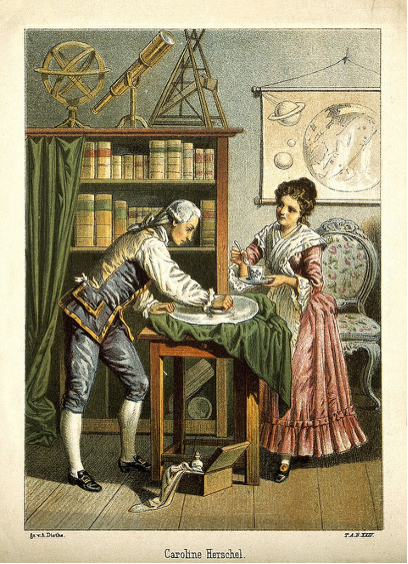
Figure 1 Sir William Herschel and Caroline Herschel, color lithograph by A. Diethe (ca. 1896). Source: Wikimedia Commons.
Recognition and Its Limits
The question of recognition is central to understanding Caroline Herschel’s place within Enlightenment science. While much of her labor remained invisible, certain achievements did bring her contributions into public view. Her discovery of a comet in 1786 marked a significant turning point in this regard, leading to the publication of her findings and a presentation before the Royal Society.16 This occasion helped to position her as an valuable contributor, albeit within a framework that retained the social constraints placed on women at the time. Such acknowledgement was often partial or severely belated. As Bernardi observes, Caroline’s achievements were frequently acknowledged only in retrospect, reflecting broader patterns of exclusion within the scientific community.17 Even when her work was recognized, it was often contextualized in relation to her brother’s achievements, rather than as independent contributions.
This pattern can also be seen in the ways her work has been remembered over time. For example, a report that highlighted key events at a conference for the two-hundredth anniversary of William Herschel’s death noted very little about Caroline even though she worked alongside him for years.18 Such omissions attest to how easily collaborative labor can be minimized or forgotten in historical narratives, even when it was vital to the work being produced.
Moreover, William’s publications relied heavily on collaborative labor, yet authorship was primarily given to William and oftentimes Caroline was not listed as an author at all. This situation betrays a fundamental conflict in Enlightenment thinking. The era valued reason and observation, but it also maintained social barriers that could not honestly acknowledge who was involved in the scientific work. Caroline’s career offers insight into how knowledge can be influenced by both talent and social status. Her “comet sweeper” telescope (figure 2), which now belongs to the Royal Astronomical Society and is preserved in the Science Museum in London, offers a material reminder of the care and discipline that defined her nightly work. The instrument testifies to the precision and repetition required for her observations, making visible the labor that was often invisible in written accounts. By preserving and displaying this object, the Science Museum acknowledges Caroline’s contributions in a way that was not accorded to her during her lifetime. At the same time, it raises questions about how and when recognition is given, and why certain forms of labor remain invisible for so long.
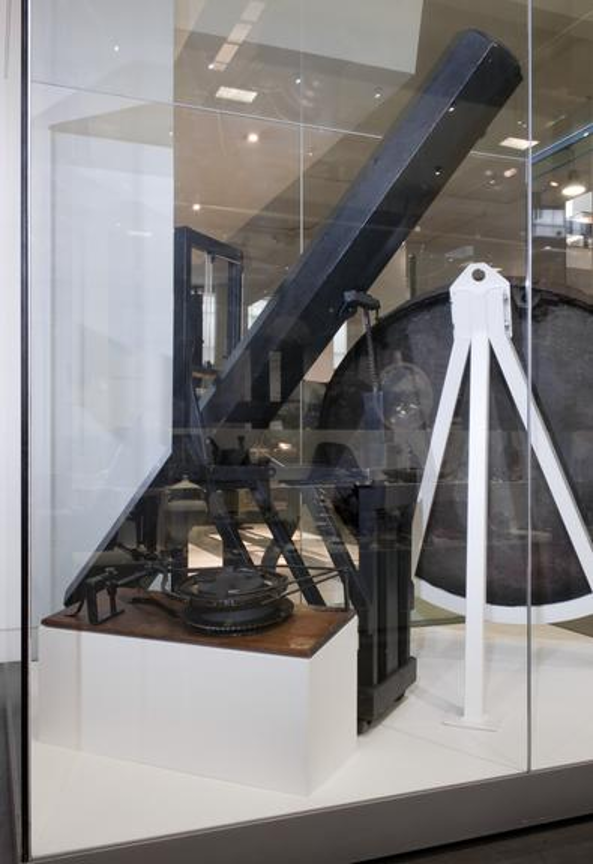
Figure 2 Caroline Herschel’s Comet Sweeper Telescope, ca. 1795–1816. Housed in the collection of the Science Museum Group, London. Source: Science Museum Group.
Rewriting Enlightenment Narratives
The Herschel family is a prime example of how music, science, and gender converged during the Enlightenment. By looking closely at the contributions of Caroline Herschel, this chapter has demonstrated how creating knowledge could be a collaborative process resulting from practices that crossed different fields. The Herschels’ professional movement from music to astronomy illuminates how intellectual work could transfer across disciplines, while also revealing the underlying structures that guided how that work was carried out. At the same time, this shift underscores the gender roles that influenced who received public attention and who remained in the background. Caroline Herschel’s work challenges traditional narratives of Enlightenment progress by drawing attention to the forms of labor that were necessary but often suppressed. Her contributions make visible the ways in which knowledge depended on support, much of which was carried out without acknowledgment.
In the end, this article argues that knowledge during the Enlightenment was sometimes created through collaboration and unequal labor. Accounting for these patterns allows for a more complete understanding of how intellectual work was actually produced. It also raises important questions about whose contributions have been preserved and whose have been left out of the historical record. By reconsidering the role of figures like Caroline Herschel, we can begin to rethink Enlightenment history as a story shaped by collective effort and uneven recognition.
- Gabriella Bernardi, The Unforgotten Sisters: Female Astronomers and Scientists Before Caroline Herschel (Springer, 2016), 137.↗
- Bernardi, 138.↗
- Michael Hoskin, “Caroline Herschel: ‘The Unquiet Heart,’” Endeavour 29 (2005): 22.↗
- Rachel Cowgill and Sarah Waltz, “Cosmic Harmonies: A Symposium Celebrating the Life, Science, Music, and Legacy of William Herschel (1738–1822),” Eighteenth-Century Music 20, no. 1 (2023): 122.↗
- Bernardi, Unforgotten Sisters, 139.↗
- Deirdre Loughridge, “Celestial Mechanisms: Adam Walker’s Eidouranion, Celestina, and the Advancement of Knowledge,” in Sound Knowledge: Music and Science in London, 1789–1851, ed. James Q. Davies and Ellen Lockhart (University of Chicago Press, 2016), 48.↗
- Emily Winterburn, “The Actions of a Well-Trained Puppy Dog: Caroline Herschel’s Modest and Useful Life,” in The Scientific Legacy of William Herschel, ed. Clifford J. Cunningham (Springer, 2018).↗
- Bernardi, Unforgotten Sisters, 138.↗
- Bernardi, 139.↗
- Cowgill and Waltz, “Cosmic Harmonies,” 123.↗
- Mrs. John Herschel, Memoir and Correspondence of Caroline Herschel (John Murray, 1876), 22.↗
- Michael Hoskin and Brian Warner, “Caroline Herschel’s Comet Sweepers,” Journal for the History of Astronomy 12 (1981): 32.↗
- Hoskin, “Caroline Herschel,” 22.↗
- Hoskin and Warner, “Caroline Herschel’s Comet Sweepers,” 31.↗
- Winterburn, “Well-Trained Puppy Dog,” 278.↗
- Caroline Herschel, “An Account of a New Comet. In a Letter from Miss Caroline Herschel to Charles Blagden, M.D. Sec. R. S,” Philosophical Transactions of the Royal Society 77 (1787): 1–3.↗
- Bernardi, Unforgotten Sisters, 139.↗
- See Cowgill and Waltz, “Cosmic Harmonies,” 122–24.↗