
A soundwalk is any excursion whose main purpose is listening to the environment.
Hildegard Westerkamp (1974)1
Soundwalks, at a fundamental level, are about the intentional act of experiencing sound. Although soundwalk pioneer Hildegard Westerkamp did not posit a specific, intended outcome from this activity after defining the term in her 1974 essay on soundwalking (above), she implies that our attention to sound can offer some deeper insight into ourselves or our surroundings. This simple but powerful idea has been a wellspring for the past half-century, inspiring people to create soundwalks that engage “excursioners” with environments in a multitude of ways. Although different soundwalk models abound, all are curated to some degree, providing the listener with a geographic route or other instructions about how to direct their ears and movement through space.2
Recent articles published in this Journal have illustrated how classrooms have adopted the soundwalk genre as a medium for students to examine environmental sound. Kate Galloway introduces soundwalk assignments to her students as a way to practice sonic storytelling. The exercise, which she describes as “critical making,” involves selecting, organizing, and shaping environmental sounds into a digital soundwalk experience that creates a narrative about a space.3 Amanda Black and Andrea Bohlman argue that the most valuable aspect of classroom soundwalk creation lies in the process. Through classroom collaboration and students’ attentiveness to civic matters, soundwalk creation constitutes a kind of “collective action.”4 In this respect, the act of curating a soundwalk can be a powerful exercise for students to articulate their experiences with sound, to develop a more textured connection with their present surroundings, and to raise awareness of the histories that a space once contained.
Soundwalk curation involves a complex set of evaluative processes as the creators decide how to guide participants through an environment. This act of curation has received a host of critical attention in soundwalk studies because it exerts a variety of power relationships. As Black and Bohlman have pointed out, soundwalks run the risk of prescriptively characterizing correct or incorrect ways of listening, making presumptions about which sounds are familiar or unfamiliar, and overlooking the ways that “diversity, difference, and privilege” factor into individuals’ evaluation of sound.5 Many soundwalks also feature technologically mediated sounds, offering listeners field recordings or prepared audio files.6 As Galloway has noted, such use of technology could mislead the listener because the prerecorded sound artifacts are “decontextualized from the non-aural connective tissues of place,” potentially emphasizing or deemphasizing a sound in a way that skews one’s interpretation.7 Critiques of curation are relevant not only to soundwalks, but to any exhibit design where the curator acts as a moderator between the presented material and visitors’ perspectives. As historian and museum professional Claire Warrior has stated, curated exhibits are inherently “sites of negotiated authority.”8
In a course on soundscapes that I teach at the Mary Pappert School of Music at Duquesne University, I work with upper-level undergraduate music majors and graduate students to explore history and culture through everyday sounds. The class is built around the creation and launch of a multimedia, interactive soundwalk that focuses on the sounds of a particular location and time frame in the history of Pittsburgh, Pennsylvania. Each soundwalk installation comprises fifteen to twenty student-designed exhibits, each interrogating a different historical sound. The class works as a team to plan the soundwalk as a whole and to ensure coherence across the individual exhibits. For two recent installations, we partnered with community stakeholders and experts who shaped our understanding of the spaces and histories with which our soundwalks engaged. The resulting installations can be experienced in person or online, and are entirely free and open to the public.9 The combined online traffic to the soundwalks, as shown by website analytics, totals more than ten thousand visitors.10
Planning, designing, and launching these soundwalks proved illuminating exercises for the class, particularly as we sought to honor a wide range of perspectives: those of our classroom curators, our community partners, and our soundwalk participants—a chorus of ears.11 I use this phrase to highlight the subjectivity and plurality of our listening community. Recognizing that each listener makes sense of sounds through their own lived experiences, we anticipated that every sound featured in the soundwalks would hold a multitude of potential meanings. This is a phenomenon that art historian Michael Baxandall observed when pointing out that a curator is only “one of three agents in the field,” the others being the subject matter of the exhibit and the exhibit visitor.12 The challenge for the curator, therefore, is determining how to balance those three perspectives in exhibit design.
The evolving role of the modern curator has been scrutinized in museum studies, with scholars questioning whether the curator should serve as a guide, mentor, content provider, or technical assistant.13 This dilemma is especially relevant to soundwalk creation since soundwalks establish varying hierarchical dynamics in their instructions for “excursioners.” In this article, I discuss how a soundwalk curator might embrace the role of a facilitator, one who aims to distribute the power of interpretation between the exhibit content and those who experience it. Drawing from my experiences supervising the design of soundwalks for The Frick Pittsburgh and in Pittsburgh’s Hill District, I will discuss the strategies and challenges students and community stakeholders encountered as we sought to treat “everyone [as] a curator,” a perspective that historian and museum professional Sarah Longair has identified as an emerging characteristic of twenty-first-century curation.14 While our ideological goals aligned with this democratic ideal, we quickly discovered that authority can never be perfectly or evenly distributed in practice. Nonetheless, through the collaborative design process, students became more conscious of the interpretive consequences of their curatorial choices.
The Ears of Our Community Partners
What does it mean to include community in the curation of an exhibit? As gallerist Ivan Karp puts it, “community is a noun but not a thing.”15 In other words, communities are not necessarily cohesive or uniform. In this respect, it is important to acknowledge not only who is represented in community collaborations, but also the inherently different objectives stakeholders might have in the project. Our community partners brought distinct points of view and different curatorial priorities to our group planning that, in turn, fundamentally informed the ways we “heard” the sounds featured in our soundwalks.
When designing the Soundwalk at the Frick (www.fricksoundwalk.com), launched in 2023 in the Homewood neighborhood of Pittsburgh, my students and I worked in partnership with The Frick Pittsburgh.16 Our work was shaped by the Frick’s institutional mission and the narratives advanced by our partners there, who were historians, public program designers, and museum professionals. Our class wanted to align our work with the spirit of the institution, and we saw this as a constructive and expected part of the collaborative process.
The Frick Pittsburgh is a ten-acre historic site comprising the Clayton house, the former home of industrialist Henry Clay Frick, a Car and Carriage Museum, the Frick Art Museum, and surrounding landscaped grounds. Frick’s daughter Helen left provisions in her will that enabled the site to be opened to the public. Honoring her legacy, The Frick Pittsburgh’s mission is grounded in “furthering the vision of Helen Clay Frick [by sharing] authentic experiences with art, history and nature that inspire and delight.” The Frick Pittsburgh has also articulated a vision to offer “experiences of discovery, inspiration and learning . . . to people’s lives and to the cultural fabric of our region.”17
The mission statement’s emphasis on “discovery,” “learning,” and “inspiration” guided our approach. These values nudged us to create a soundwalk installation that would depart from pedantic instruction and instead “inspire” exploration. Additionally, our soundwalk sought to reveal new ways of thinking about sound, encouraging “discovery” while also trying to eschew prescriptive modes of listening and evaluation. As Black and Bohlman caution, soundwalks can imply that “there is a best listening practice and some listeners are better than others.”18 Conscious of this tension, we placed particular emphasis on the final tenet of the Frick’s mission—“delight.” By foregrounding joy and fun in the exhibit narratives, we hoped that soundwalk visitors would feel free to listen and interpret with playfulness rather than academic “correctness.”
One student-generated exhibit that leaned into “delight” was focused on the Frick’s fruit and vegetable garden. The student who conceptualized this project contemplated how the sonorities of consuming fresh produce, from the slicing of vegetables to crunching on an apple, are often overlooked when people think about their sensory experiences with food. A sound clip the student produced for the exhibit included the sounds of fresh produce preparation and mastication, interpreted and performed on percussion instruments. The exhibit embraced “delight” in the sense that the sound clip was an artistic interpretation rather than a field recording. It also invited imaginative listening, encouraging soundwalk visitors to consider the ways their own sensory experiences signal satiety and satisfaction with food.19
On our first class field trip to The Frick Pittsburgh (figure 1), we arrived knowing that our soundwalk would focus on the period Henry Clay Frick lived with his family at the Clayton house, from the 1880s to the early 1900s. Amanda Gillen, then director of learning and visitor experience at the Frick, guided us through the grounds and spoke about the institution’s responsibility to contextualize the Frick family’s privileged status in Pittsburgh. While the coke and steel industry brought prosperity to the region, it also sparked labor disputes that continue to echo in local memory, most notably the 1892 Homestead Strike that resulted in a violent conflict. Gillen avoided narratives that laud the success or philanthropy of a privileged elite family, suggesting that it was appropriate for our exhibits to problematize Henry Frick’s legacy. Responding to this framing, students expanded their focus beyond the Frick family itself to include the household infrastructure, domestic and grounds workers, and the stark contrasts between the soundscapes of the Frick estate and Homestead’s industrial neighborhoods where Frick factory workers lived.
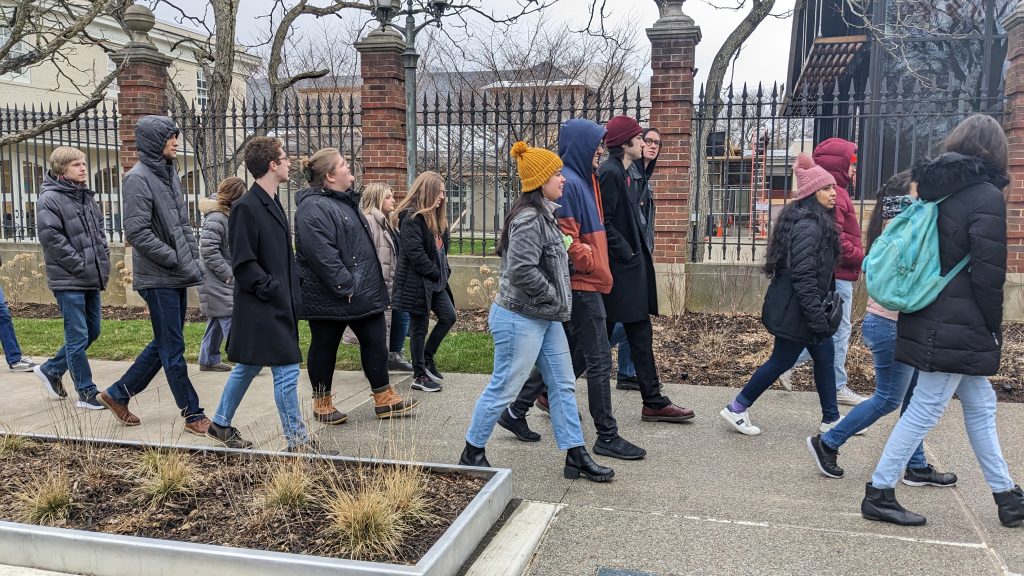
Figure 1 Students touring The Frick Pittsburgh in 2023
Our class was introduced to different social issues and community goals when working on the Soundwalk in the Hill District (www.hilldistrictsoundwalk.com), launched in 2024 in Frankie Mae Pace Park located in Pittsburgh’s Lower Hill District. The soundwalk installation explores the Hill District’s history from the 1930s to the 1960s. We focused on the everyday life of the Hill District’s predominantly African American population, highlighting the community’s achievements as well as the community’s loss when urban redevelopers leveled and erased the Lower Hill neighborhood.20 Our soundwalk particularly emphasized the civic leadership of activist Frankie Mae Pace, who mobilized the community through musical events and activism to fight against community displacement during this period.21
Unlike our work at the Frick, our partners in the Hill District introduced us to histories that were personally lived. Dr. Kimberly Ellis, founder and director of the Historic Hill Institute, not only discussed the history of the Hill District with us, but also shared anecdotes about her uncle and playwright August Wilson and described how she witnessed the disenfranchisement of the Hill community (figure 2).22 She stressed her hope that the exhibit would have a restorative function, building public awareness of this history. We also partnered with community leader Terri Baltimore, who led us on a tour through the neighborhood, shared personal recollections from her childhood, and circulated a scrapbook of photos she had taken during her years providing social services to the community through the Hill House Association.23 Finally, we worked with the University of Pittsburgh’s head music librarian Christopher Lynch, who offered us access and insight into the Pace family archive, having played a central role in its collection and preservation. In addition, he introduced our class to a consequential historical recording—an extended interview with Frankie Mae Pace.
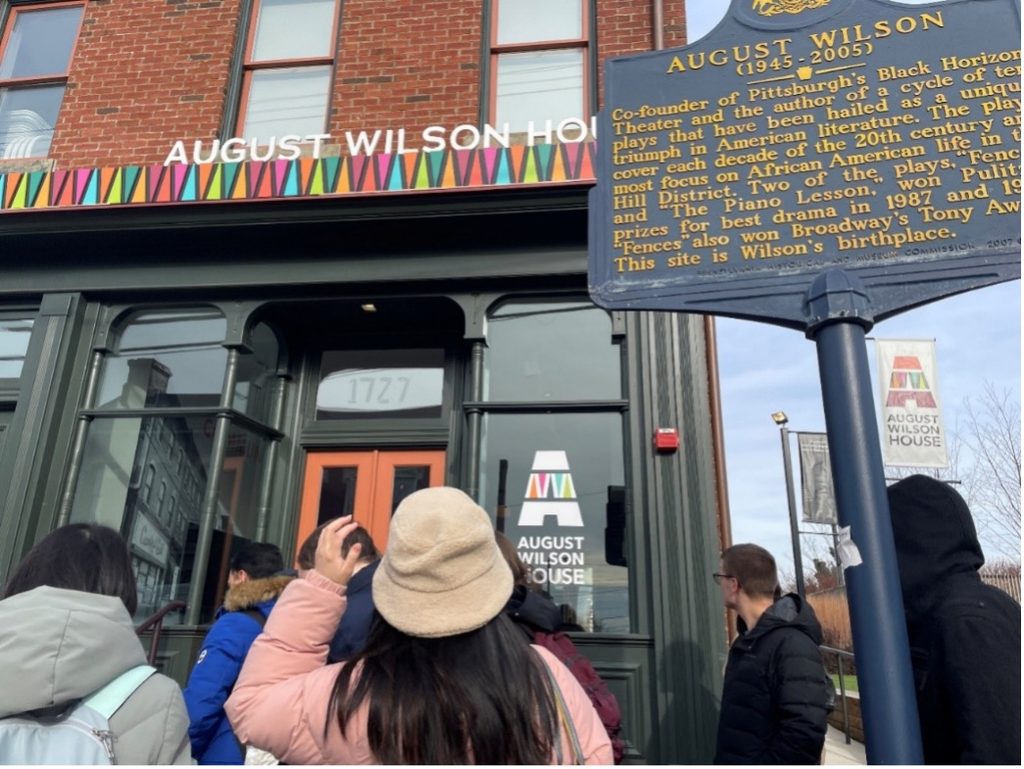
Figure 2 Terri Baltimore led our visit to the Hill District, stopping at August Wilson House
Oral history emerged as a central component of the Soundwalk in the Hill District project. As public historian Michael Frisch has noted, oral histories serve as a kind of cultural empowerment by “returning to particular communities or generating from within them the authority to explore and interpret their own experience.”24 At the same time, Frisch underscores that oral histories are complex artifacts because they blur authorship by distributing it between the interviewee and the interviewer. Sometimes it is unclear who is guiding the narrative. Additionally, oral histories collapse critical distance, as the studied community and the interpreter of that community are one and the same. Frisch ultimately advocates for a balance of interpretative practices that allows room for both community voice and scholarly critical perspective.25 While our class tried to take a balanced, Frischian approach, it proved difficult in practice.
Working with partners whose personal and professional identities were deeply embedded in the histories we sought to represent raised an important curatorial challenge. Our class often hesitated to assert a critical perspective that might appear to override our partners’ lived experiences. This was an especially central concern because of the historic suppression of Hill District voices, and our worry that we might unintentionally repeat that offense, even in subtle ways. Therefore, our class was predisposed to elevate our partners’ narratives, treating their oral accounts as the most historically authoritative.
Oral testimony often served as an interpretive anchor for student work. For instance, one student focused his individual exhibit on the Hill District’s Freedom House Ambulance Service, the first mobile emergency service in the country.26 He was particularly curious about the ways the vehicle siren was perceived by the community. Dr. Ellis connected me with Chief John Moon, a first-generation paramedic for Freedom House, and I relayed my student’s questions to him.27 Chief Moon explained that it was a tremendous comfort for Black residents in the Hill District to be treated by paramedics who looked like them, and that this established trust. When I asked how he felt when sounding the siren during an emergency, he said that he associated the siren sound with a sense of responsibility as well as pride in serving and saving lives within his community.28 Later, in a TV interview, Chief Moon explained that in his retirement, his mission was to share his story widely to resist the historic erasure of the Freedom House organization. As he put it plainly, “if you get rid of the history makers, you get rid of the history.”29 Recognizing the importance of honoring the perspectives of Chief Moon as a “history maker,” my student treated his account of the ambulance sirens, as relayed to me in our unofficial conversation, as the most historically authoritative understanding of the sound. While the student encouraged his exhibit’s visitors to think about ambulance sounds in the present day, he did not invite them to speculate on historic, lived experiences in the Hill District. This was a clear instance where his curatorial choice distributed more interpretive power to Chief Moon than the public audience.
For some students, the Hill District project sparked a broader interest in civic matters. One student, who had grown up in Pittsburgh, was deeply upset that she never learned about Hill District history prior to this project. These oral histories revealed a past she felt had been rendered invisible, and she became personally invested in the values and aims that our partners shared with us. This ultimately led her to apply for and accept a position as an educator in a Hill District middle school, a professional appointment she informed me of in an email a few months after the launch of Soundwalk in the Hill District. This episode illustrates how working closely with oral histories and community partners can blur the line between academic study and civic involvement. More broadly, many students designing the Hill District installation became emotionally invested in the histories they studied, making it more difficult for them to maintain analytical distance in their respective exhibits.
Our community partners ultimately influenced the purpose, messaging, and tone of our soundwalks. At the Frick, it was important that the student exhibits share new perspectives or questions that spark an “aha!” moment for visitors. It was also important that the exhibits somehow empower audiences to reflect on their own relationships with sound. Several years after its launch, Amanda Gillen noted that the Frick soundwalk matched the institution’s values by offering visitors a chance to “think about their lives with what they are seeing and hearing.”30 In this respect, there was less emphasis on getting the Frick’s story “properly” told, and more emphasis on how the Frick history relates to the lives of people today. By contrast, our partners in the Hill District were more invested in which narratives we shared, hoping especially that our soundwalk installation would foreground oral histories that had been threatened with erasure. The differences between these partnerships illustrate how community-embedded work does not lead to one repeatable model. For each installation, students weighed the context as they decided when to invite public reflection and when to privilege the authority of our partners.
The Ears of Our Class
After our partners shared archival materials, oral histories, and subject expertise, our classroom team then supplied the lens through which they were interpreted. We analyzed all sources through the framework of sound studies. As Jonathan Sterne writes, sound studies is characterized by a “broad transdisciplinary curiosity and an awareness of partiality,” and the field has no “a priori privileged group of methodologies” for engaging with sound.31 In keeping with this idea, the course design cast a wide net, including seminal literature on soundscapes as well as a variety of later sound studies—from speech analysis of auctioneers to the interpretation of primary sources describing the sounds of nineteenth-century industrial life—that could serve as models for students’ own sonic analyses.32
For a class of music students already schooled in ear training, who were able to identify intervallic content and recognize instruments by timbre, students were generally well prepared to take the conceptual leap to sound studies. Readings from R. Murray Schafer’s The Soundscape and Ear Cleaning showed them the transferability of their musical listening skills to interpreting everyday and historical sounds.33 In class, students were encouraged to treat all studied sounds with attentiveness, descriptive nuance, and interpretive curiosity.
Unlike their theory and ear training classes, however, there was no single listener—neither student nor instructor—who could claim privileged authority over how a sound should be understood or whether it is worth attention. Such listening, which is routine in sound studies, helps to disrupt the traditional power dynamics of listening, as partiality and subjectivity are favored over supposed correctness. When students became aware of this redistribution of listening authority, they stopped wondering if they “heard it right” or “heard the important details.” This was a liberating moment for some, I imagine, but it also came with students assuming new responsibility since their “hearing” would ultimately be weighed and evaluated by their exhibit’s audience. In turn, new questions arose: Would my interpretation be shared by others? Would people care about hearing this sound as I do? Would my interpretation charm, offend, or perplex audiences?
For both Soundwalk at the Frick and Soundwalk in the Hill District, each student contributed an individual exhibit that was centered around a historical sound, or collection of sounds, related to the respective soundwalk’s theme. Each student’s exhibit was marked by a botanical garden sign that asked a specific question about a sound. The questions were paired with QR codes that invite audiences to learn more (figures 3 and 4). By scanning a QR code, visitors are led to an online landing page where they can read a brief discussion addressing the sign’s question and listen to a student-created sound clip. At the bottom of the each exhibit’s landing page, visitors are invited to answer a multiple-choice question and are given the option to elaborate on their experience in a free-response text box.
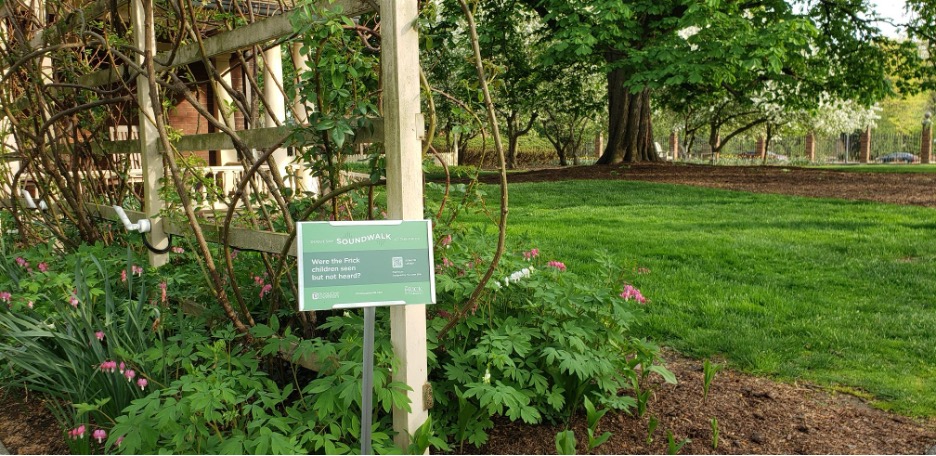
Figure 3 Exhibit sign from the Soundwalk at the Frick installation
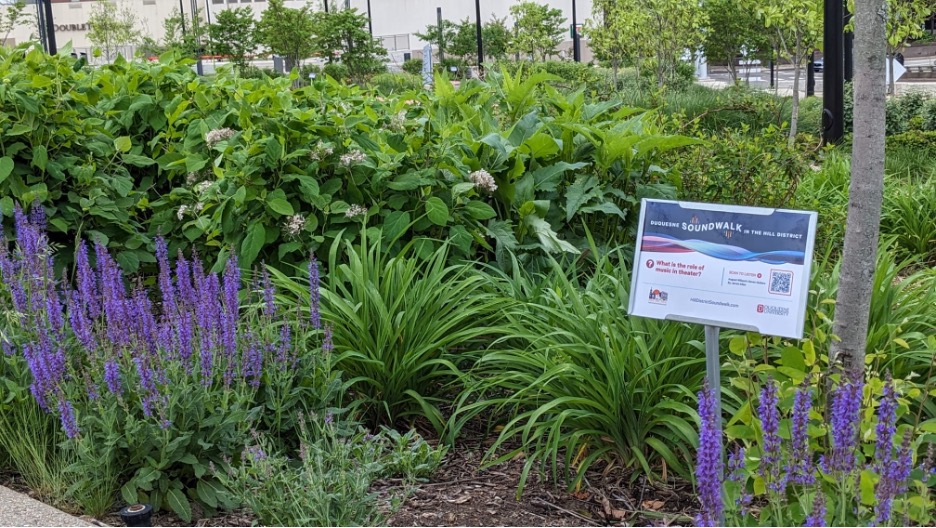
Figure 4 Exhibit sign from the Soundwalk in the Hill District installation
While designing their individual exhibits, students spent considerable time crafting their sign’s question, or “hook,” particularly since space was limited and the question needed to be stated in sixty characters or less. During one classroom working session, I recall a student asking me whether their question was effective: “Is this a good one? ‘How communicative is your car horn?’” Maybe? I wondered if it would appeal to a Gen Alpha and Gen Xer alike. I turned to another student and volleyed the question, “I’m not sure. Would you click on that?” After redirecting inquiries a few more times, students stopped directing their hooks to me specifically and instead began to share them with peers. Students realized that peer feedback was essential because they needed to consider different senses of humor, generational perspectives, regional knowledge, and cultural viewpoints. As students grappled with their questions, a game emerged which we called the “clickbait challenge.”
Clickbait is often sensational, and it has a reputation for being misleading or of dubious value.34 We certainly did not want to be misleading or dubious, but we did appreciate the fact that clickbait-like questions leave some information unresolved and provoke curiosity. When our class did a round-robin exchange of hooks, students assessed each question to see if it provoked robust or lukewarm interest. We cultivated a mode of curation that prioritized questions rather than conclusions. This approach aligns with museum professional Kathleen McLean’s observation that participatory models of museum curation shift the focus from getting the story right to investing effort in generating “juicy questions.”35 By posing open-ended questions in an exhibit, curators send a cue to visitors that multiple interpretations are not only possible but encouraged.
On the online landing pages, students needed to interpret the questions they posed about sound. Michael Frisch has discussed the levels of intervention that a curator might adopt. He describes the tangle of unfiltered archival material as “raw” when it is not ordered, contextualized, or excerpted. When curators make sense of this “raw” material in a definitive and linear way, they fashion what he describes as a “fully baked” exhibit. He is a proponent of a more “half-baked” approach, according to which exhibits resist fixed interpretations in favor of an open-ended and “shareable” space for audiences.36 In this spirit, student exhibits did not offer definitive answers to the questions posed on the signs. They instead presented at least two different interpretations, thus sidestepping a single, authoritative reading. And as noted, each exhibit’s landing page includes a concluding exit poll and a free-response box, both of which invite interpretations beyond those presented in the exhibit.
By the end of the course, many students embraced the ways the soundwalk project made room for different perspectives. In surveys completed after launching the Soundwalk at the Frick, the class imparted advice to future students who would enroll in the next iteration of the course. One student wrote, “proceed with an open mind and allow the content of this class to take your thinking in a different direction than you might be used to.”37 Another echoed this sentiment, advising that future students “have an open mind and be willing to experience sound in many different ways.”38 In the surveys taken after completing the Soundwalk in the Hill District, student responses revealed how they valued working with oral histories. One student advised future soundwalk designers to “get as involved as possible and speak to any living people in the community.”39 Another encouraged open-ended exploration, saying students should “just go walk around the area you’re researching a couple times. It helps put everything into context.”40
Across both class cohorts, students concluded that it was important to reorient their hearing to another person’s perspective and to recognize the subjectivity of sonic interpretation. Throughout the design process, students needed to anticipate how their unknown audiences might encounter, misunderstand, or engage with their exhibits. While it was self-evident that we could not foresee every reaction, nor authentically “hear” like another person, the exercise of imagining another potential interpretation encouraged students to contextualize their work thoughtfully.
Audience Ears
While students worked closely with community partners during the exhibit design process, we had considerably less direct contact with audiences after the soundwalk installations were launched. Thus, our understanding of the varied ways our audiences interacted with our exhibits remains difficult to assess. Most of the information we have about visitor engagement comes from website analytics, which show the overall traffic through the exhibit landing pages, as well as poll responses and free responses in the comment boxes (table 1). The data suggests that audience engagement was not only shaped by the exhibit content but also the surrounding environmental context.
| Visitors | Poll Responses | Free Responses | |
|---|---|---|---|
| Frick Soundwalk (launched 2023) | 9,726 | 417 | 63 |
| Hill District Soundwalk (launched 2024) | 1,302 | 149 | 22 |
Table 1 Audience participation and feedback, as of August 12, 2026
Audience participation at The Frick Pittsburgh and in the Hill District has differed, likely because visitors encountered the soundwalks in very different settings. Considering how exhibition environments shape audience perspective, art historian Svetlana Alpers has described the “museum effect” where visitors arrive at museum-like institutions with the intent to study the exhibits with attentiveness and scrutiny, treating every displayed item as a kind of art piece.41 Alpers’s observation is relevant to visitors at the Frick soundwalk, who came to the institution with the time, intent, and expectation that they would be engaged in an interpretive exercise. This mindset likely contributed to the fact that QR codes on the Frick exhibits were scanned with greater frequency than those in the Hill District.
The geographic context for the Hill District exhibit is quite different. Situated in a public park on an elevated overpass above a highway, the exhibit occupies an environment characterized by transit rather than sustained attention. The exhibit appears along pedestrian pathways with the ambient sounds of traffic radiating from all sides.42 The overall public interaction with the Hill District exhibit was lower, suggesting that the pedestrians ambulating through the space may not have been operating with a museum-like mindset during their daily transit. However, the people who did scan the QR codes to explore the Hill District exhibits were much more likely to respond to the polls and free-response prompts. For instance, 11.5 percent of Hill District participants replied to polls, compared with 4.3 percent of Frick visitors. In the Hill District, 1.7 percent of participants offered free responses, compared with 0.7 percent of Frick visitors. This data suggests that once individuals made the decision to engage with the exhibit in the public park, they committed more fully to the interactive model.
Analytics alone reveal little about how audiences engaged with the exhibit. The free responses, though representing only a small portion of our visitors, offer a more nuanced snapshot and show how our audience made sense of the sounds. The free responses suggest that our audiences were treating our sound exhibits as “social objects,” a term used by museum professional Nina Simon to describe artifacts that have the ability to catalyze conversation.43 Most often, our audience contributed to the dialogue by describing how the sound related to their personal experiences. This was, in large part, because the student exhibits shifted toward more generalized questions in the concluding paragraphs of their landing pages, inviting visitors to connect the sounds to their own lives.
One particular exhibit in the Frick soundwalk exemplifies how student designers encouraged audiences to treat sounds as “social objects.” The exhibit features the ring tone of the “annunciator,” an electric service bell used to summon household staff in the Frick household.44 Directing audiences to think about people’s responsivity to alarms, the student curator asked: How long might the Frick family expect to wait before staff answered the ring? How did the service staff perceive the electric bell? The student then shifted to present-day expectations about sonic alerts. Visitors were invited to consider how much time is appropriate before reacting to the ding of a text message. In addition to poll respondents, several visitors offered open-ended comments. Six out of twenty-three free respondents indicated that the amount of time depended “on the situation” (March 10, 2024) or “on the relationship between the sender and the receiver” (April 22, 2023), offering examples of when they would reply immediately and when they felt less urgency.45
Free responses to other student exhibits followed the same trend, with visitors consistently offering personal anecdotes and observations.
One visitor evaluated the sounds of trains:
I tremendously enjoy the sounds of the trains in the area of millvale/etna near my home. Its [sic] an even bigger treat to also see the train while experiencing the sounds. waiting at the RR signal to cross the tracks is not an jnconvenience [sic]; it’s an emmersive [sic] experience. When in a car or in an establishment in close proximity to a track, i always pause to enjoy the sight and sounds of the trains. I find it thrilling!46
Another considered their intolerance for ambient sound in concert halls:
I sat through a performance where someone was eating potato chips out of a bag for probably ten minutes at least (which seemed like three hours!). It was dark so the culprit was “invisible.” Finally I couldn’t stand it and I spoke out when there was a moment between songs, “I’m going to say what we are all thinking: Seriously stop eating potato chips during a concert. What is the matter with you!?” Not my finest, most patient moment . . . but the potato chipper was not heard from again!47
And still another visitor assessed the sound of ambulance sirens:
No, I don’t love the sound of a siren, but I think it needs to be “alarming” to alert people/traffic to get out of the way!48
These reactions, though indicating a limited number of perspectives, offer a fleeting glimpse into audience engagement. Some like the concertgoer recalled a memory from the past, connecting the exhibit discussion to an anecdotal experience. Still others made value assessments, such as the commentator on the ambulance siren, about the sounds they like and those they do not. Finally, visitors like the commentator on train sounds thought about how sounds might affect their behavior or movement, such as stopping or moving out of the way.
Ultimately, the information we collected from the website analytics and polls showed that, as expected, the exhibits did not elicit a uniform way of thinking about the audio examples or environments. A handful of free responses from visitors suggest that they, like the students, saw the soundwalk as a vehicle for exploring a different perspective that they had not previously considered. Respondents pointed out things that “never occurred to me before,”49 “made me think really think hard,”50 and offered “an interesting idea!”51 These comments suggest that visitors may have adopted, to an extent, the interpretive posture cultivated by the students themselves, finding new ways to evaluate and relate to sound.
Conclusion
In liberal-arts classrooms, we often encourage students to identify and articulate their individual interpretations, whether looking at a piece of music or a novel. When students are asked to curate, however, their analytical process changes. They must decide what is heard, how sounds might be understood, and whose perspectives are in the foreground. Throughout the Frick and Hill District soundwalk projects, I observed students grappling with the figurative chorus of ears. At times, they tempered their own opinions to make room for alternatives. They also had to make peace with a degree of ambiguity as they skirted definitive conclusions. Curation sits somewhat uneasily beside the traditional pedagogical imperatives to “find your voice” and “stake a claim.” While I believe it is important for students to develop and defend impassioned views, I was surprised to see a different set of pedagogical benefits emerge as students practiced curation.
The project shifted class dynamics in ways that I have not been able to replicate outside the soundscape course. The design process demanded everyone’s input, necessitated democratic dialogue, and fostered the welcome byproduct of classroom camaraderie. In other classroom settings, group discussion can be illuminating and energizing, but it is not always essential to the work at hand. Journaling, reading, or experiential exercises are often equally useful tools. In this curation project, however, peer exchange was indispensable because students needed to vet their word choices and interpretations, ensuring that their exhibits would be accessible to an unknown audience.
Finding ways to cultivate this kind of dialectical engagement seems particularly pressing in the present era, as students enter professional lives in which ideas, businesses, and people’s profiles are increasingly presented on digital platforms and curated for unknown audiences. The ability to remain conscious of one’s situatedness in a sea of different perspectives and to make measured, thoughtful contributions appears increasingly important. The curatorial process ultimately encourages students to communicate with civic awareness and humility. They do not have to relinquish their own perspectives but simply recognize when to make room for those of others.
APPENDIX 1: COURSE GOALS AND OUTLINE
Course Learning Goals
- Identify the ways that environmental sounds build culture and collective identity, and recognize power struggles in the sonic environment
- Develop familiarity with the soundwalk genre, studying and critiquing soundwalk models
- Grasp general history and cultural perspectives of the geographic site and time period studied [the Frick soundwalk emphasized 1880–1900; the Hill District soundwalk emphasized mid-twentieth century]
- Work individually and in a class group to complete a multimedia soundwalk installation, a community-engaged, public-facing sound exhibit; design a deeply researched exhibit that examines a sound artifact from a particular geographic location, past or present, identifying cultural associations with and potential meanings of that sound
- Collaborate with community stakeholders on tours and in individual research projects with respect, professionalism, and civic empathy
Course Timeline
Weeks 1–7: Theoretical Concepts and History
Students participate in a seminar-style class. They read excerpts from academic journal articles to gather foundational knowledge on sound studies, soundwalking and soundscape exhibits, and the history of the site we intend to explore. Weekly response assignments help students develop and refine their thinking. This block of foundational study overlaps with the initial phases of soundwalk planning. In addition, students write professional bios and prepare headshots for the soundwalk website.
Weeks 3–4: Field Work with Community Partners
Students take a guided tour of the exhibit site, led by local experts. These visits allow students to experience the site firsthand and learn about its historical and cultural importance from community members.
Weeks 5–6: Site Selection, Preliminary Research, and Collaboration
Students select the specific location that will be the focus of their individual exhibits. They brainstorm what kinds of sources they will need to flesh out their exhibits. They investigate what types of research resources are available and where. Peer discussion plays a key role in helping each student refine and commit to a promising idea.
Weeks 7–8: Further Research and Hook Development
The class shifts fully into a workshop format, using all class time for research and small-group discussion. Students deepen their research using maps, archives, oral histories, and institutional records. They also develop a sixty-character question or “hook” for the front of their exhibit sign—something that sparks public curiosity. Examples from past projects include: “How communicative is your car horn?” and “How important is sound when we eat?” Students coach each other closely on these hooks, refining both content and tone.
Week 9: Sound Clip Creation
Each student produces a sixty-second sound clip that serves as their individual exhibit’s central sonic artifact. These clips help answer the exhibit’s guiding question. For instance, one student recorded the Frick orchestrion and mixed in dishware sounds to simulate a dinner party, trying to shed light on the question: “Orchestrion: Background Music or Concert Instrument?” Another student performed Cécile Chaminade’s Sérénade in D, linking it to American feminist activity organized through Chaminade Clubs, in order to explore the question: “Can Parlor Music Communicate Political Ideas?” The sound clips are the heart of each exhibit.
Weeks 10–12: Writing, Revising, and Editing
Students undergo an intensive writing process. They meet individually with me to refine their exhibits’ analysis, structure, and clarity. Most students revise their project at least three times, often more, to get it ready for public launch. This rigorous writing phase is usually a new experience for students because most have not previously worked with an editor who scrutinizes their text for publication.
Weeks 13–14: Website Upload and Launch
Approved exhibit texts are uploaded to the website along with relevant images. We celebrate the soundwalk launch with an event shared with community partners, friends, family, and classmates.
APPENDIX 2: EXHIBIT TEMPLATE
Sign Question: Students need to capture the interest of visitors in sixty characters or less. This question is printed on the physical signs at the installation site. If the visitor is interested, they can scan the QR code which will take them to a landing page that features a four-paragraph writeup, an audio file, and an interactive poll with the option to offer a free response.
Paragraph 1—The Hook: Students craft an engaging introduction to their exhibits, showing how a particular sound or collection of sounds offers insight into culture, values, or a historical time and place. Engaging style of writing, even sensational (within reason). The goal is to initiate an energetic conversation.
Paragraph 2—Background: The student author offers a brief explanation of the context or methodology. Some students provide historical details, showing how people in a particular community might be emotionally connected to a sound.52 Others introduce interpretive lenses.53
Paragraph 3—Sound Analysis and Audio Clip: The student author provides a guided listening that highlights sonic features the listener might notice in the audio clip. Several different interpretations of the sound are offered.
Paragraph 4—Synthesis and Relevance: The student author gestures toward the broader implications of their exhibit, considering how historic sounds relate to the world today. Students purposefully avoid assigning one “correct” meaning to their sound, inviting audiences to draw their own conclusions.
Poll: Each exhibit closes with a single-question poll. To encourage buy-in and participation, we provide easy-to-click radio-button answers. If participants have more to say, they can do so in a “share more” field for free responses.
- Hildegard Westerkamp, “Soundwalking,” Sound Heritage 3, no. 4 (1974): 18.↗
- Soundwalks offer “excursioners” new ways of appreciating the sonic landscape of spaces. The soundwalks pioneered by Westerkamp in the 1970s offer prescribed walking routes and invite participants to listen to sonic features of their journey with intention, an approach rooted in deep listening. The concept of soundwalking has since broadened, with designs encompassing a variety of objectives. Some soundwalks are primarily aesthetic—for instance, the urban-based soundwalks by Ellen Reid are delivered through an app that changes an audio stream based on the listener’s geotagged location. It guides the listener on a sonic journey through the city, replacing ambient sound with a dynamic, location-responsive musical composition. Other soundwalks emphasize historical narrative. The Stonington Soundwalk, for instance, offers oral histories of specific places, providing a narrated tour that shifts the emphasis of historical curation from secondary, summarizing texts to intimate storytelling. Still others, such as the Indigenous Pittsburgh Soundwalk, promote interactive engagement with the surroundings. The walk encourages participants to recognize and even imitate elements of the local ecosystem—like local bird calls or wolf howls—and, in the process, imparts the values and worldviews of historic Indigenous populations of the region. See Hildegard Westerkamp, “Sound Walk,” Inside the Soundscape, accessed March 31, 2025, https://www.hildegardwesterkamp.ca/sound/installations/Nada/soundwalk/. See also R. Murray Schafer, Soundscape: Our Sonic Environment and the Tuning of the World (Destiny Books, 1994; originally published in 1977). Additionally, see a comprehensive literature review of soundwalks in Andra McCartney, “Soundwalking: Creating Moving Environmental Sound Narratives,” in The Oxford Handbook of Mobile Music Studies, ed. Sumanth Gopinath and Jason Stanyek, vol. 2 (Oxford University Press, 2014). Aforementioned soundwalks include: “Ellen Reid SOUNDWALK,” accessed March 31, 2025, www.ellenreidsoundwalk.com/; “Stonington Soundwalk,” The First Coast, accessed March 31, 2025, www.thefirstcoast.org/stonington-soundwalk; and Alexa Woloshyn, “Indigenous Pittsburgh Soundwalk,” accessed March 31, 2025, https://alexawoloshyn.com/index.php/indigenous-pittsburgh-soundwalk/.↗
- Kate Galloway, “Making and Learning with Environmental Sound: Maker Culture, Ecomusicology, and the Digital Humanities in Music History Pedagogy,” this Journal 8, no. 1 (2017): 65.↗
- Amanda M. Black and Andrea F. Bohlman, “Resounding the Campus: Pedagogy, Race, and the Environment,” this Journal 8, no. 1 (2017): 9.↗
- Black and Bohlman, 16.↗
- Laura Dallman’s article about technologically mediated soundwalks acknowledges that technologies have shaped soundwalks since their origins. She explores the ways that this mediation affects how listeners hear and interpret sound. She argues that technology in soundwalks should be approached with critical awareness, neither taken for granted nor dismissed as inherently problematic. Laura Dallman, “Walking with Headphones? Engaging with Technologically Mediated Soundwalking,” this Journal 15, no. 1 (2025). See also Christos Carras, “Soundwalks: An Experiential Path to New Sonic Art,” Organised Sound 24, no. 3 (2019); and Amanda Gutiérrez, “Aural Border Thinking as a Decolonial Soundwalking Methodology,” in Soundwalking Through Time, Space, and Technologies, ed. Jacek Smolicki (Routledge, 2023).↗
- Galloway, “Making and Learning,” 53.↗
- Quoted in Sarah Longair, “Cultures of Curating: The Limits of Authority,” Museum History Journal 8, no. 1 (2015): 1.↗
- In this article, I will discuss the two community-engaged soundwalks designed by my classes––one at The Frick Pittsburgh and the other in the Hill District of Pittsburgh. Our pilot soundwalk, the Duquesne Soundwalk (mpsomsoundwalk.wixsite.com/duquesne) launched in 2021, is located on the university campus. It focuses on campus sonic life, past and present. No community partners were involved, with student research conducted remotely while COVID-19 measures were in place. It sparked the idea to curate soundwalks in partnership with community stakeholders. Throughout the article, I describe the soundwalk projects—the Soundwalk at the Frick and the Soundwalk in the Hill District—as “installations.” Each of these installations comprises fifteen to twenty student-created “exhibits” that examine specific sound examples related to the overarching theme of the respective soundwalk.↗
- Data from Wix web-hosting analytics, gathered August 12, 2026.↗
- My use of this phrase is different from and unrelated to its use by poet Denise Riley who uses the same phrase “chorus of ears” to describe the ways that the “persona” of the poet overpowers the separate, more fragile, “voice” in each poem. She is talking, to put it in less poetic terms, about a chorus of narrative voices. I am literally talking about the subjectivity of listening among many ears. Denise Riley, A Chorus of Ears: On “the voice of the poem” (Picador, 2026).↗
- Michael Baxandall, “Exhibiting Intention: Some Preconditions of the Visual Display of Culturally Purposeful Objects,” in Exhibiting Cultures: The Poetics and Politics of Museum Display, ed. Ivan Karp and Steven D. Lavine (Smithsonian Institution Press, 1990), 39.↗
- Bill Adair, Benjamin Filine, and Laura Koloski, “Throwing Open the Doors: Communities as Curators,” in Letting Go? Sharing Historical Authority in a User-Generated World, ed. Bill Adair, Benjamin Filine, and Laura Koloski (Pew Center for Arts & Heritage, 2011), 69.↗
- Longair discusses the ways that museums involve their visitors in exhibit interpretation, drawing insight from how audiences describe and contextualize artifacts. See Longair, “Cultures of Curating,” 6.↗
- Ivan Karp, “Introduction: Museums and Communities: The Politics of Public Culture,” in Museums and Communities: The Politics of Public Culture, ed. Ivan Karp, Christine Mullen Kreamer, and Steven D. Lavine (Smithsonian Institution Press, 1992), 3–4.↗
- We worked with Caito Amorose, curator of performance events, and Amanda Gillen, currently the executive director of The Frick Pittsburgh and formerly the director of learning and visitor experience.↗
- “Our Mission, Vision, & Values,” The Frick Pittsburgh, accessed January 24, 2026, https://www.thefrickpittsburgh.org/mission (emphasis added).↗
- Black and Bohlman, “Resounding the Campus,” 6.↗
- Soojin Park, “How Important Is Sound When We Eat?,” Soundwalk at the Frick, accessed January 27, 2026, https://www.fricksoundwalk.com/orchard.↗
- By the 1930s, the Pittsburgh Courier was the most widely circulated African American newspaper in the nation. The Crawford Grill became an acclaimed jazz landmark as it featured legends like Miles Davis, John Coltrane, and Art Blakey on its stage. For a comprehensive history of the Hill District during this era, see Mark Whitaker, Smoketown: The Untold Story of the Other Great Black Renaissance (Simon & Schuster, 2018).↗
- Frankie Mae Pace was married to Charles Henry Pace, composer and musician who was a key figure in gospel music circles. The couple organized church choir festivals that served multiple functions—entertainment, community connection, and social activism.↗
- For more on the Historic Hill Institute and the advocacy projects of the institution, see Historic Hill website, accessed January 26, 2026, www.historichill.com.↗
- The Hill House Association was a center established to help provide social services to the Black community in the Hill District, serving the area from 1963 until 2019. For more information, see “Hill House Association: ‘The Heart of the Hill,’” Hill District Digital History, accessed January 25, 2026, https://hillhistory.org/items/show/45.↗
- Michael Frisch, A Shared Authority: Essays on the Craft and Meaning of Oral and Public History (State University of New York Press, 1990), xxi.↗
- Frisch, xxi–xxii.↗
- The student, Christopher Cox, explains how the Freedom House Ambulance Service was conceived to meet the pressing needs of the Hill District community. He writes, “The predominantly African American community living in the Hill District grappled with unreliable transport services to hospitals, as ambulances and police cars ignored or denied requests for help. Even when a patient received transport, responders were only equipped to offer basic first aid. Freedom House redefined the concept of an ambulance––it transformed a mere transport vehicle into a mobile hospital that was operated by highly-trained paramedics.” Christopher Cox, “Were the Sounds of Freedom House Ambulances Linked to Anxiety or Relief?,” Soundwalk in the Hill District, accessed January 24, 2026, https://www.hilldistrictsoundwalk.com/ambulance. The city of Pittsburgh eventually took over the ambulance service and many original paramedics had trouble retaining their jobs. Only recently has the pioneering work of Freedom House first responders been made visible in documented urban history. See, for example, the WQED documentary Freedom House Ambulance: The FIRST Responders, directed by Annette Banks (2023), https://www.wqed.org/freedomhouse/.↗
- With a busy schedule of talks and travel, Chief Moon was unable to connect directly with my student, despite being interested in the project. At a fortuitous encounter in the green room of a local TV station, I was able to meet him and relay my student’s questions.↗
- Chief Moon also emphasizes these themes in his interview for the WQED documentary. See Freedom House Ambulance.↗
- Intersections, “Intersections 04/28/2024,” aired April 28, 2024, on KDKA-TV CBS Pittsburgh, 12:47–14:52, https://www.cbsnews.com/pittsburgh/video/intersections-04282024/.↗
- Quoted in Gabriel Welsch, “Endless Potential: Alumna Amanda Dunyak Gillen Discovered a Program That Taught Her to Help Others Discover,” Duquesne University Magazine 24, no. 1 (Winter 2025): 27.↗
- Jonathan Sterne, “Sonic Imaginations,” in The Sound Studies Reader, ed. Jonathan Sterne (Routledge, 2012), 4, 6–7.↗
- Our sound-study models were far-reaching, as we examined interpretive frameworks that could be appropriate for the students’ sonic analyses in the exhibit. The sources I mentioned include Nikki Malley, “A Sale You Can Dance To: Entrainment, Flexibility, and Improvisation in the Metric Practice of the American Auctioneer,” Journal of the Society for American Music 7, no. 3 (2013). Also, Zachary Wallmark, “Noise, Music, and Power in the Industrial City, 1890–1930,” Music Research Forum 28 (2013).↗
- Schafer, Soundscape. See also Schafer, Ear Cleaning: Notes for an Experimental Music Course (Clark & Cruickshank, 1967).↗
- See Merriam-Webster Dictionary, “Clickbait,” last modified July 2, 2026, https://www.merriam-webster.com/dictionary/clickbait.↗
- Kathleen McClean, “Whose Questions, Whose Conversations?,” in Letting Go? Sharing Historical Authority in a User-Generated World, ed. Bill Adair, Benjamin Filine, and Laura Koloski (Pew Center for Arts & Heritage, 2011), 76. This also aligns with what Tom Satwicz and Kris Morrissey describe as a broader shift in museum practice from delivering information to serving as a “facilitator of experiences around content.” Satwicz and Morrissey, “Public Curation: From Trend to Research-Based Practice,” in Letting Go? Sharing Historical Authority in a User-Generated World, ed. Bill Adair, Benjamin Filine, and Laura Koloski (Pew Center for Arts & Heritage, 2011), 196.↗
- Michael Frisch, “From A Shared Authority to the Digital Kitchen, and Back,” in Letting Go? Sharing Historical Authority in a User-Generated World, ed. Bill Adair, Benjamin Filine, and Laura Koloski (Pew Center for Arts & Heritage, 2011), 130.↗
- Exit poll data for the Soundwalk at the Frick, collected April 23, 2023.↗
- Exit poll data for the Soundwalk at the Frick, collected April 23, 2023.↗
- Exit poll data for the Soundwalk in the Hill District, collected April 29, 2024.↗
- Exit poll data for the Soundwalk in the Hill District, collected April 29, 2024.↗
- Svetlana Alpers, “The Museum as a Way of Seeing,” in Exhibiting Cultures: The Poetics and Politics of Museum Display, ed. Ivan Karp and Steven D. Lavine (Smithsonian Institution Press, 1990), 26.↗
- Frankie Mae Pace Park connects downtown Pittsburgh with the Hill and with the Bluff area where Duquesne University is located.↗
- Nina Simon, The Participatory Museum (Museum 2.0, 2010), 127–28.↗
- Carson Graef, “Annunciator: Innovative Technology or Workplace Stressor?,” Soundwalk at the Frick, accessed January 26, 2026, https://www.fricksoundwalk.com/annunciator.↗
- Soundwalk at the Frick, free responses, March 10, 2024, and April 22, 2023, respectively.↗
- Soundwalk in the Hill District, free response, May 22, 2024.↗
- Soundwalk at the Frick, free response, May 12, 2023.↗
- Soundwalk in the Hill District, free response, July 9, 2024.↗
- Soundwalk at the Frick, free response, March 6, 2024.↗
- Soundwalk at the Frick, free response, March 10, 2024.↗
- Soundwalk in the Hill District, free response, November 12, 2024.↗
- For instance, student Christopher Cox pointed out that Freedom House ambulance sirens meant that someone was coming to help. The medics were predominantly African American and they lived in the Hill District neighborhood. This was important context for understanding how the sounds may have signaled that someone familiar, either personally familiar or culturally familiar, was associated with the siren sound. See Cox, “Freedom House Ambulances.”↗
- For instance, student Crews Owen drew from the research of phonetics expert Gabrijela Kišiček to provide a framework for assessing the persuasiveness of speech. He applied this lens to an excerpt from an interview with Frankie Mae Pace, who in addition to being a community advocate was known for her oratory skills. See Crews Owen, “What Makes a Voice Sound Persuasive?,” Soundwalk in the Hill District, accessed April 8, 2025, https://www.hilldistrictsoundwalk.com/frankie-pace.↗