
Marianna Martines (1744–1812) (figures 1–2) was a Viennese female composer and performer whose career flourished during the Age of Enlightenment. She was active in elite circles, composed over two hundred works, and broke gender barriers.1 Despite success during her lifetime, she is rarely included in modern discussions of music history. Her career as a performer is rarely noted, and she is not typically considered a significant composer of that period.
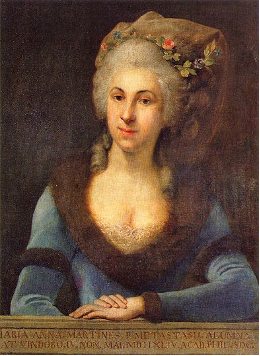
Figure 1 Portrait of Marianna Martines, by Anton von Maron. Wien Museum Inventory no. 158.809.
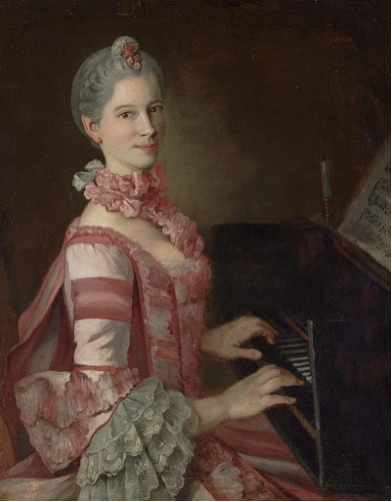
Figure 2 Portrait of Marianna Martines, by Peter Anton Lorenzoni. Source: “Marianna Martines,” Explore Classical Music, accessed September 10, 2026, https://www.exploreclassicalmusic.com/marianna-martines.
Charles Burney described meeting Martines in Vienna in 1771: “Mademoiselle Martinetz [sic] was at her musical studies, and writing; she directly complied with my request, of sitting down to the harpsichord. . . . [S]he produced a psalm of four voices with instruments. . . . It was an admirable composition, and she played and sung it in a very masterful manner. . . . I could not finish this visit till I had petitioned Mademoiselle Martinetz to oblige me with copies of her compositions, which she readily granted.”23 If Burney considered Martines to be a composer with so much to offer to his own project of writing A General History of Music, then why has she been overlooked in more recent years? Why is she now left out of conversations regarding music history? Historiography tends to focus on a group of canonical figures, leaving many successful and talented women composers unnoticed and understudied. This is not because of a lack of skill or even the absence of public reputation during their own lifetimes. It is because later musicological categories, including those relating to the Classical style, were constructed retrospectively and with a bias toward male composers. This has resulted in Martines being erased from the music-historical record, despite being fully active in the dominant stylistic currents of her time. This erasure can be understood through the lens of feminist epistemology, which shows how systems of knowledge production have historically devalued and excluded women’s contributions. This essay focuses on Martines as a case study of this tendency, shedding light on the role of women composers in eighteenth-century musical culture. It examines three key aspects: Martines’s early life, family, and social position; her engagement in Enlightenment culture, education, and salons; and her musical style.
Early Life, Family, and Social Position
Martines was born into a life of privilege, which enabled her access to formal music education and ultimately to become an accomplished musician and composer. She was born on May 4, 1744, in Vienna, to Maria Theresia von Sober and Don Vincente Nicolo de Luesia y Martínez. Of Spanish and Italian heritage, her family had relocated from Naples to Vienna in 1720 after her father accepted employment as a soldier under then-Emperor Charles VI. He later left military service to take a position at the papal embassy, marking the family’s integration into prestigious social and courtly circles. Although not a part of the high aristocracy, the Martines family clearly had significant social status, enjoying positions that allowed them to be involved in elite cultural circles.4
Martines grew up in a highly intellectual environment. Her eldest brother, Joseph, achieved considerable distinction, demonstrating extraordinary linguistic ability and professional success. He was fluent in over twelve languages, and also had a close relationship with Pietro Metastasio, the poet laureate of the Austrian imperial court and the most notable opera librettist of the eighteenth century. These two factors may have provided him with employment opportunities with the Royal Library in 1749. Throughout his life, Joseph Martines continued to build his reputation in the library, rising in rank and becoming a curator and finally its director a few years prior to his death in 1789.5 More broadly, the prominence of all four of Martines’s brothers––Joseph (Giuseppe), Dionysius (Dionisio), Carl Borromeus (Carlo Borromeo), and Johann Baptist (Giovanni Battista)––reflects the family’s deep engagement with Enlightenment intellectual contexts in Vienna.6
The family’s ascent in status was formalized in 1774, when all four brothers requested and were granted knighthood. As Irving Godt explains, the brothers received their honors on October 23, 1774, and this knighthood granted all members of the Martines family the privilege of using the prefix von in their name.7 Such recognition demonstrates the family’s high rank and highlights the social esteem that Martines enjoyed during her lifetime. Questions remain regarding the family’s status prior to this moment, as Martines’s father had previously employed titles such as “Prefect of His Highness, the Prince of Cordona,” reflecting the family’s complex negotiation of identity and rank within imperial society.8 Despite these various claims to nobility, Martines herself appears to have avoided using titles, usually signing her letters simply using her name, Marianna Martines, adding “de” once she turned sixteen.9
Martines’s access to education played a crucial role in her artistic development, success, and career. Especially significant was her relationship with Metastasio, who lived with the Martines family in the Altes Michaelerhaus, next door to one of the oldest and most famous churches in Vienna (the Michaelerkirche). Metastasio’s influence on her life was enormous, as he shaped her education from a young age. In Godt and John Rice’s account, Martines’s musical training was shaped by her exceptional intellectual and physical talents, as well as her remarkably beautiful voice, which was evident even in early childhood. She quickly distinguished herself from her siblings, becoming a particular favorite of the librettist, who guided her upbringing and education with the care of a devoted father. She began composing vocal music and keyboard pieces at a young age, and her first surviving works from around 1760, when she was only sixteen years old, include a Mass in D minor.10 Metastasio also oversaw her training in keyboard and singing, which she received first from the young Joseph Haydn and later from the composer Niccolò Porpora.11 In this way, Metastasio’s mentorship not only enabled her to receive an exceptional musical education, but also gave her proximity to prominent musicians and composers of that time, who in turn influenced her development. For any musician, but especially for a woman, this opportunity was rare and unique.
However, even in her own lifetime, Martines was not universally regarded as a good composer, and rumors circulated that she had achieved her professional success by dubious means. For instance, Caroline Pichler, an Austrian historian and novelist born twenty-five years after Martines, wrote:
It is an altogether strange observation . . . that not a single woman has yet succeeded in distinguishing herself as a creative musician. There are successful women painters and poets, and if not a single woman in any art or science has ever achieved as much as men have, they have nevertheless made significant strides forward, but not in music. And yet one would think that this art, which demands the least preliminary study and more feeling and imagination than the other arts, would be a proper medium in which the female spirit might express itself.12
Pichler also implies that Martines may have been Metastasio’s mistress, and that he found his tutelage “a pleasant task.”13 The comment reveals how Martines was subject to speculation and gossip, which insinuated that her success was due to an intimate relationship with an influential man.
Enlightenment Culture, Education, and Salons
While Enlightenment contexts were not receptive to the full participation of women, the rise of salon culture offered women like Martines an important space to compose and perform. Women were often formally excluded from institutions through legal means: They could not occupy court positions and their participation in the public sphere was restricted. However, at the same time, they could receive an education and engage in intellectual life. By consequence, women became both subjects of and contributors to Enlightenment discourse on social progress. As Karen O’Brien has noted in relation to Mary Wollstonecraft and her contemporaries,
The static, or even deteriorating, legal and political situation of women . . . did not, however, correspond to a diminishing sphere of social operation for women in this period. Indeed, the period gave rise to a growing number of opportunities for middle- and upper-class women to exercise their talents outside the family in both informal and institutionalised settings.14
Women increasingly partook in activities such as writing, teaching, and intellectual exchange, even as their roles remained shaped by social constraints. Education played a crucial role in enabling this participation. Upper- and middle-class women were instructed in languages, music, and literature, though this education was often framed as a form of “accomplishment” rather than professional training. Thinkers such as Mary Astell and Catharine Macaulay advocated for improved education for women, arguing for greater intellectual equality. Macaulay’s Letters on Education (1790), for instance, proposed “an ambitious programme of identical education for girls and boys,” influencing later feminist thought and having a profound impact on Wollstonecraft, Macaulay’s younger contemporary.15 Despite such advances, women’s education and roles in society remained restricted, as they were expected to prioritize family life.
The emergence of musical salons opened new opportunities for women to participate in the social and artistic currents of the Enlightenment. Salons were living rooms or parlors used for gatherings. These spaces functioned as sites of intellectual and artistic exchange. Salons were particularly significant for women because they provided a space in between the public and private spheres. As Rebecca Cypess explains, because these salons were not formal institutions, women were more welcome and could become influential figures in their spheres of activity. This environment allowed them not only to compose, but also to experiment, exchange ideas, perform, and host.16
Early evidence of Martines’s contributions to salon culture is a piece of music labeled Per la Sig.ra Contes.na Spinucci (“To the Countess Spinucci”), currently held at the Bibliothèque nationale de France. This Italian aria is scored for solo soprano and four-part strings, and uses text from the opera seria Temistocle by J. C. Bach with a libretto by Metastasio.17 The ensemble required for such an aria could be easily accommodated in a patron’s salon. This work was composed in ca. 1762 when Martines was about eighteen years old, suggesting that she was granted access into elite circles at an early age. Further research suggests that “Countess Spinucci” was Maria Chiara Spinucci (1741–92), the Princess Consort of Saxony, who spent most of her life in Italy but also briefly visited Vienna. A brief nineteenth-century biography describes her as follows: “To her beauty was added all the accomplishments that distinguished a worthy and well-educated young woman: Dance, song, musical performance, and literature successively kept her occupied. At the age of eighteen years she was taken by her father to Vienna; and after having sojourned in this city for a brief time, departed for the court of Saxony.”18 Spinucci would likely have encountered Martines during this visit to Vienna, further reinforcing the likelihood that this work was written for her. Due to their overlapping time in Vienna, their elite social circles, shared Italian heritage, and Countess Spinucci’s documented musical pursuits, I suggest that this work was very likely written for her. It is probable that performances of this work would have occurred in a salon or domestic setting, bolstering the hypothesis that Martines’s early career evolved primarily within these semiprivate spaces. Despite this piece being composed for a member of the aristocracy by a prominent composer, there is no record of it existing in modern editions.
In later years, Martines would form her own salon. Even though Martines’s family belonged to the upper class, she likely felt pressure to behave modestly and not draw too much attention to herself. She did not perform widely in public. She limited her appearances to social circles and did not publish her works frequently; keyboard sonatas in E major and A major were the only works published during her lifetime, with approximately two hundred works surviving only in manuscript. Martines nonetheless broke gender barriers, becoming the first woman to propose her name for election in the Accademia filarmonica di Bologna, and then became the first woman to be elected into the academy in 1773. This appointment offers further evidence that her work and musical talent were both recognized and celebrated.
Cypess suggests that Martines used the musical salon as a space where she could compose freely, perform, and experiment, cultivating her creativity without fear of backlash.19 Nonetheless, salons were not some catch-all solution to gender disparity, as inequality prevailed outside of them. Moreover, history does not view salon music as an important locus for the Classical style, which has tended to elevate large-scale works for the public.20 In short, while the Enlightenment created new cultural spaces that allowed women like Martines to participate in music and intellectual life, these opportunities remained fundamentally shaped by gender norms. Martines’s career reflects this dichotomy: She was able to compose, perform, and be successful in a high-status environment, yet her activity was largely confined to salons, and her presence in the public sphere was limited. Martines’s career thus illustrates both the possibilities and the constraints of women’s participation in Enlightenment culture.
Musical Style
Students in music history survey classes commonly learn about the “Classical period,” which spans roughly 1760 to 1825 and is strongly associated with Vienna and composers like Haydn, Mozart, and Beethoven. This designation excludes Martines because its definition, exclusionary and retrospectively applied, does not match her contributions or style of music. When we talk about a “Classical style,” it is usually described by means of musical characteristics or features. These could include clarity of texture, balanced phrases, and a strong sense of structure, especially as articulated through sonata form. It is understood to have emerged from the galant style, which emphasizes simplicity, elegance, and clear melodic lines. Overall, the traditional view presents the Classical style as balanced, controlled, and structurally unified, and it treats male composers of large-scale genres as the primary figures who defined that style.
Matthew Head and Susan Wollenberg have argued that this understanding is actually quite misleading, because not only were women also composing using these techniques and characteristics, but the Classical style was much broader than the formal criteria to which it is usually confined.21 The very idea of a “Classical style” is retrospective, as it was defined after the fact by musicologists; in other words, it was not a category within which eighteenth-century composers were consciously working. Instead, the idea was developed in the late nineteenth and early twentieth centuries, by musicologists trying to organize music history into different time periods.22 As such, rather than reflecting how music actually functioned at the time, the terms “Classical period” and “Classical style” are later constructs that simplify a diverse range of music making that was occurring in Enlightenment contexts.
The Classical style model prioritizes qualities like balance, unity, and formal coherence, especially in instrumental works like symphonies and string quartets.23 As a result, music that does not conform to those ideals—including simpler, song-like music, operatic music, more performance-driven (or improvisatory) music, and music that was made in a domestic setting—is seen as less serious or less valuable. This has major consequences for how we understand composers of the period, especially female composers. Women were often more active in these so-called “lower-status” genres, not because they lacked ability, but because of social constraints that limited their access to professional positions, public concert performance, and large-scale commissions. Thus, when we define the “Classical style” in such a narrow way, we are perpetuating an idea of the musical canon that excludes important composers and entire spheres of activity. Beyond this restrictive framework, Head and Wollenberg also point to a deeper issue: The concept of the “Classical style” combines two different aspects, one being a time period (the late eighteenth century) and the other being a set of aesthetic ideals (balance, symmetry, and coherence).24 However, not all music from this period truly aligns with those ideals. By merging a historical period with a specific set of stylistic values, the model creates the illusion that a single, homogenous style existed, when in reality multiple styles coexisted. Ultimately, the authors emphasize that the “Classical style” is an ideologically charged framework that shapes what we value, what we study, and, ultimately, which composers we remember.25
A look at the other styles that existed alongside Viennese classicism produces a richer picture of Enlightenment Era music making, and can bring Martines back into the historical narrative. As noted above, one of the most salient styles of eighteenth-century music was the galant style, characterized by clarity, simplicity, and elegance. Musically, that often means a clear texture of melody with accompaniment, simple harmonic progressions, and reliance on a vocabulary of schemata.26 Much of Martines’s music was composed in the galant style. For instance, her Dixit Dominus demonstrates this very clearly. The work is a large-scale sacred composition for chorus, soloists, and orchestra. As Joseph Taff has written, the organizing structures of the Dixit Dominus range “from voice-leading patterns a few bars long to sequences of cadences throughout large sections of movements. These schemata clearly indicate Martines’s fluency in, and conscious usage of, the musical vocabulary of the galant style.”27 (Unsurprisingly, this large-scale work was never performed in her lifetime.) Martines’s Concerto for Cembalo28 (figure 3) can also be characterized as being in the galant style, as can her orchestral Overture in C Major, both of which feature light textures, simple harmony, and clear and direct melodies.29
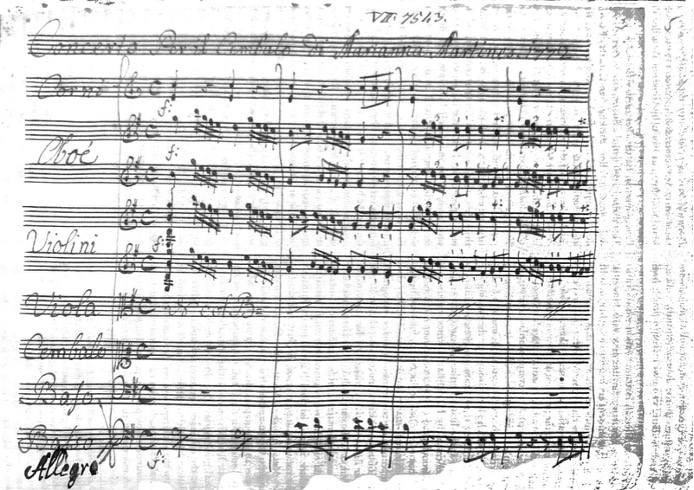
Figure 3 Marianna Martines, Concerto per il Cembalo (1772). Beginning of first movement of the autograph score. Autograph housed in the archive of the Gesellschaft der Musikfreunde in Vienna (A-Wgm).
Another key aspect of musical culture in this period was the idea of sensibility, or Empfindsamkeit. This is both a musical style and a broader cultural value. It refers to the capacity to feel deeply and to respond emotionally—to other people, to art, and so on. In music, this often resulted in heightened expressivity. One might hear chromatic harmonies, unexpected shifts, and melodies that feel fragmented. The goal is not balance and control, but the expression of strong emotion. This expressive musical language was particularly prevalent in vocal music, smaller-scale genres, and intimate performance contexts.30 These were areas in which women composers had distinguished themselves, especially in song and vocal writing, where emotional nuance and communication were paramount. Indeed, while musicologists have looked to publicly performed instrumental music to define the Classical style, in reality singing and vocal expression were at the heart of musical culture. Even instrumental music was often informed by vocal ideals, through characteristics such as lyricism and phrasing. These stylistic and social trends matter because women had much greater access to vocal music than to large-scale instrumental genres.31
Indeed, if we shift our focus away from symphonies and toward vocal performances and genres, women composers become much more visible as integral participants in the musical culture of the time. Martines’s Dixit Dominus is a strong case in point (example 1). This grand motet in seven movements is scored for soloists, five-part chorus, and orchestra. The composition features Martines’s ornate melodic writing throughout, and with fugues concluding the fourth and sixth movements. Likewise, Come le limpide onde, a sacred cantata based on Psalm 42, is a significant composition. The work is scored for soprano, alto, and tenor soloists, SATB choir, string orchestra, horns, and organ, and represents a fusion of galant features and the principles of Empfindsamkeit.32 Clearly Martines was composing complex, large-scale vocal works, but because their genre is not symphonic, the exclusionary definition of the Classical style fails to recognize their importance.
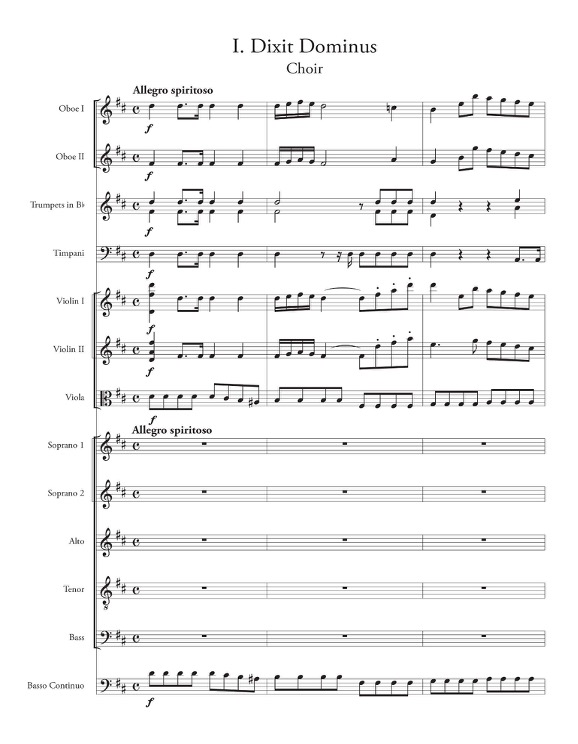
Example 1 Opening measures of Marianna Martines, Dixit Dominus (1774), ed. Andrew Hathaway (pub. by editor, 2022), https://imslp.org/wiki/Dixit_Dominus_(Martinez%2C_Marianne)
From a pedagogical standpoint, if we conceive of the “Classical style” as constrained largely to Vienna, instrumental music, and formal coherence, then many women composers vanish from the history of eighteenth-century music as it is taught. When we shift our perspective to include styles like the galant and the culture of sensibility, and restore vocal music and performance to their central roles, a very different picture of music in Enlightenment contexts emerges. Instead of a single, unified Classical style, what we see is a diverse musical landscape made up of different stylistic approaches, including the galant and the culture of sensibility, with a continued emphasis on vocal music and its performance. In that broader view—as reflected in Burney’s description of his visit to Vienna that opened this article—Martines was not marginal or insignificant. She was active in the main stylistic and cultural developments of the time.
One solution to the marginalization of women in music history may lie in the reinterpretation of history using feminist epistemology, which questions the traditional view of knowledge as objective and neutral. Feminist epistemology uses concepts like “power-based ignorance” and “epistemic injustice” to highlight how gender inequalities shape who is able to produce and be recognized within systems of knowledge.33 This framework provides a compelling explanation as to why Martines has been excluded from historical narratives about music in the Enlightenment. Because she was a woman, her accomplishments were not valued as much as those of her male contemporaries, and (with the exceptions mentioned above) she was not granted admission into formal institutions. Feminist epistemology helps us to recognize the impact of historical gender inequality as well as the reasons why certain composers were valued more than others by later eras. A reinterpretation of Enlightenment Era music history in pedagogical contexts could emphasize small-scale genres of music as well as large-scale ones, the vocal as well as the instrumental, and music making in private and semipublic contexts as well as fully professional ones. It could draw on feminist epistemology to show how gender inequality has shaped music making in historical contexts, limiting women’s access to formal institutions and positions of power.34 Ultimately, the issue is not whether Martines was a composer of the Classical style, but rather how the concept of “Classical style” itself has been defined. In other words, it is imperative to reflect not merely on the place of women in the history of music, but also on the restrictive and discriminatory categories we use to write that history in the first place.
- Irving Godt and John A. Rice, Marianna Martines: A Woman Composer in the Vienna of Mozart and Haydn (University of Rochester Press, 2010), 256–64.↗
- Godt and Rice, 2.↗
- Charles Burney, The Present State of Music in Germany, the Netherlands, and the United Provinces, 2nd ed. (Becket & Co. et al., 1775), 1:345–46.↗
- Irving Godt, “Marianna in Vienna: A Martines Chronology,” Journal of Musicology 16, no. 1 (1998): 136–58.↗
- Godt, 139.↗
- Godt, 14.↗
- Godt, 137.↗
- Godt, 138.↗
- Godt.↗
- Godt and Rice, Marianna Martines, 3.↗
- Godt and Rice, 32.↗
- Quoted in Godt and Rice, 3.↗
- Quoted in Godt and Rice.↗
- Karen O’Brien, Women and Enlightenment in Eighteenth-Century Britain (Cambridge University Press, 2009), 10.↗
- O’Brien, 173.↗
- Rebecca Cypess, “Musical Salons of the Enlightenment: Platforms for Women’s Musical Agency,” in Open Access Musicology: Volume Three, ed. Daniel Barolsky and Louis Epstein (Lever Press, 2023), 69–98, 72.↗
- “Martines, Marianna (1744–1812),” Catalogue général de la Bibliothèque nationale de France, accessed September 3, 2026, https://catalogue.bnf.fr/ark:/12148/cb17083775b.↗
- “Alla bellezza onde era fornita congiunse tutti i pregi che distinguono una bennata e ben educata fanciulla: la danza, il canto, il suono e la lettura la tenevano successivamente occupata. In età di diciott’ anni fu condotta dal padre a Vienna; e dopo aver soggiornato per breve tempo in quella città, passò alla Corte di Sassonia.” Eugenio Comba, Donne illustri italiane: Proposte ad esempio alle giovinette (Carlo Pozzi, 1872), 85. Translated by Ellen Lockhart.↗
- Cypess, “Musical Salons,” 82.↗
- Cypess, 94.↗
- Matthew Head and Susan Wollenberg, “Did Women Have a Classical Style?,” in The Cambridge Companion to Women Composers, ed. Matthew Head and Susan Wollenberg (Cambridge University Press, 2024), 161–62.↗
- Head and Wollenberg, 161–64.↗
- Head and Wollenberg, 164.↗
- Head and Wollenberg, 161.↗
- Head and Wollenberg, 164.↗
- See, for instance, Robert Gjerdingen, Music in the Galant Style (Oxford University Press, 2007).↗
- Joseph Taff, “Marianna von Martines’ Dixit Dominus: A Stylistic Synthesis,” Choral Journal 61, no. 9 (2021): 6.↗
- Marianne Martines, Concerti per il Cembalo, ed. Melanie Unseld (Hollitzer, 2026).↗
- Head and Wollenberg, “Did Women Have a Classical Style?,” 162↗
- Head and Wollenberg, 173–74.↗
- Head and Wollenberg, 164.↗
- Manuscript score (1770) available at “Come le limpide onde (Martinez, Marriane),” International Music Score Library Project (IMSLP), accessed April 3, 2026, https://imslp.org/wiki/Come_le_limpide_onde_(Martinez%2C_Marianne).↗
- Elizabeth Anderson, “Feminist Epistemology and Philosophy of Science,” last modified August 1, 2024, Stanford Encyclopedia of Philosophy, ed. Edward N. Zalta and Uri Nodelman, https://plato.stanford.edu/entries/feminism-epistemology/.↗
- Jo Ann Arinder, “Feminist Theory,” Theoretical Models for Teaching and Research, Washington State University, accessed April 4, 2026, https://opentext.wsu.edu/theoreticalmodelsforteachingandresearch/chapter/feminist-theory/; for more on feminist epistemology, see relevant entries in Gabriele Griffin, A Dictionary of Gender Studies (Oxford University Press, 2017).↗