Dances were a prominent genre of music well before the Age of Enlightenment, but during Mozart’s lifetime dance styles were in flux. What can we learn about the dances and styles of music in the Enlightenment by looking at Mozart’s Le nozze di Figaro? This article explores this fascinating aspect of the opera. Duple-meter dances, such as the gavotte, correspond to aristocratic dominance, while triple-meter dances, such as the passepied, represent when the lower classes hold power. As Wye J. Allanbrook has shown, consideration of the ways that dance music is used in Mozart’s operas not only provides a fascinating glimpse into the social and musical history of dance, but also introduces additional meaning to the story unfolding onstage.
Le nozze di Figaro is one of Mozart’s best-known and well-respected Italian operas. Its first performance took place on May 1, 1786, at 6:30 p.m. in the Burgtheater in Vienna, Austria.1 (The performance was supposed to have taken place on April 28, but had to be postponed by three days.2) It became quite popular in subsequent years.
With only eight performances after the premiere, we can infer that the initial public reception of this opera was decent, but not exceptional (otherwise there would have been many more performances). After a two-year hiatus, it resumed being performed at the Kärntnertor Theater over the next two years. Mozart was paid 450 kreuzer (= 7.5 gulden) for composing the music for the opera.3
As Le nozze di Figaro promotes the Enlightenment values of social equality and freedom from oppression, my claim is that the dances used in this opera represent a transition from pre-Enlightenment to Enlightenment values. As duple-time dances were primarily associated with an older or “learned” style, and faster, triple-time dances belonged to the galant style, it would make sense to observe a transition from duple-time dances early on in the opera to more triple-time dances in the latter parts of the opera. I will begin my essay by describing briefly some of the most common rhythms and dances that were available to Mozart. Then I will do a deep dive into Le nozze di Figaro, focusing on five key scenes spread out over the opera. For each of the scenes, I will give a brief summary of the plot and provide a musical analysis, including rhythms and dances used, key changes, and their significance with regard to the plot.
Rhythms and Dances of the Enlightenment
Let us begin by considering the rhythms and dances that were popular during the Enlightenment. One important thing to note here is that, according to eighteenth-century writers, time signatures with longer note values have a more grave character and slower tempos than those with shorter note values.4 For example, a loure in 3/2 time is slower than a minuet in 3/4 time, which is itself slower than a passepied in 3/8 time.5 This may seem counterintuitive, because one might think that if a shorter note takes the beat, then in that same time signature the long notes would be multiple beats long, but that is not the case.
Furthermore, while the duple meters (e.g. 2/2, 4/4, 6/8) were associated with the “learned” (i.e. Baroque) style, the triple meter, particularly in faster tempos, was associated with galant-style social dances.6 Mozart uses the triple-meter dances the minuet, gigue, sarabande, siciliano, passepied, and pastorale, while the duple-meter dance rhythms he incorporates are the march, bourrée, and gavotte.7 Interestingly, there are some dance rhythms that could be either triple meter or duple meter: the musette and the contredanse or “waltz.” The most important dance was the minuet, which was known as the “queen of all dances.”8 Other important dances during Mozart’s lifetime, also seen in Le nozze di Figaro, include the gigue, passepied, gavotte, and minuet.
Le nozze di Figaro: The Opening Scene
The beginning of the opera immediately shows how the music and text interact to provide dramatic effects, including dramatic tension. Figaro and Susanna, servants to the Count and Countess Almaviva, respectively, are to be married. While Susanna is looking for affection and support from Figaro because she is nervous about the marriage and has a personal issue with the Count, Figaro is continuously avoiding Susanna’s appeals by measuring their bridal bed; measuring the bed provides a distraction for him (figure 1).9 Symbolically, the bed he is measuring represents his anxieties about measuring up to Susanna’s sexual expectations during and after marriage.10 The tension in this scene was an addition made by Mozart and Da Ponte. Beaumarchais’s original play does not start in this fashion.11
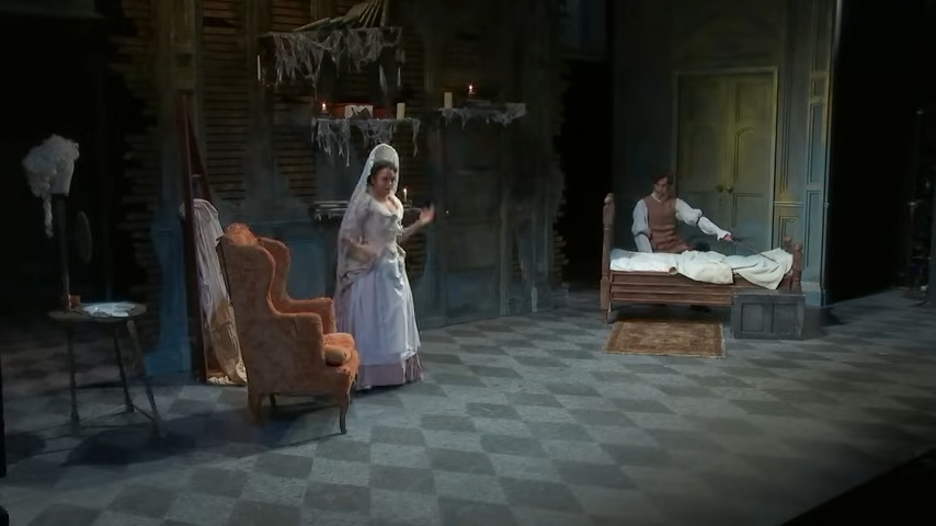
Figure 1 Opening Scene of Le nozze di Figaro, showing Figaro measuring the bed. Still from “Sir Thomas Allen Directs Mozart The Marriage of Figaro,” YouTube video, uploaded by Royal College of Music, August 26, 2020, 5:26, https://www.youtube.com/watch?v=55ik-PzAXsQ (hereafter “Sir Thomas Allen Directs”).
Let us take a look at the numbers Figaro counts while measuring the bed. The sequence goes: five, ten, twenty, thirty, thirty-six, forty-three. The first four numbers make sense if using a measuring instrument ruled in groups of five; the number thirty-six is plausible for an estimated final measurement.12 However, the number forty-three is complete nonsense, as it is seven more than the preceding measurement. Furthermore, if one looks at the German translation of the opera’s libretto, one notices that in measure 29 of the German text, Figaro does not sing “dreiundvierzig” (forty-three in German).13 Instead, he sings “ja, ja, es geht,” which translates to “yes, yes, alright.” This suggests that forty-three was a made-up number, signaling to the audience that this is an Italian joke, called a lazzo, which is part of the commedia dell’arte tradition. Figaro would hold up a measuring tape or rod to the audience after each number was called. This was a common feature in opera buffa, according to which the obsessive, messy calculations of male characters are contrasted with requests for recognition and love from women.14
Mozart provides a musical representation of the measuring joke (see example 1).15 In the orchestral introduction, the first phrase played by violin 1 leads to a perfect interval, D–A–D. The second phrase ends on a major sixth, D–B–D. The third phrase goes to a minor seventh, and then the reference note D is lost altogether, D–C–F♯. The periods have a 6 + 2 phrase structure. That is, the antecedents are each six measures long and the consequent is only two measures (instead of the standard 4 + 4 phrase structure found in many galant themes). The longer antecedent builds up tension in an arc toward the dominant. The antecedent is in the style of a bourrée, and the consequent returns to the tonic in the style of a gavotte.16 In this scene, as David Lewin has argued, G major is supposed to be the tonic key and the G harmony represents stability. That is why Susanna’s theme is in G major. On the other hand, Figaro’s music emphatically and repeatedly rejects G major, insisting on D major because of his compulsive avoidance of Susanna’s emotional appeals.17
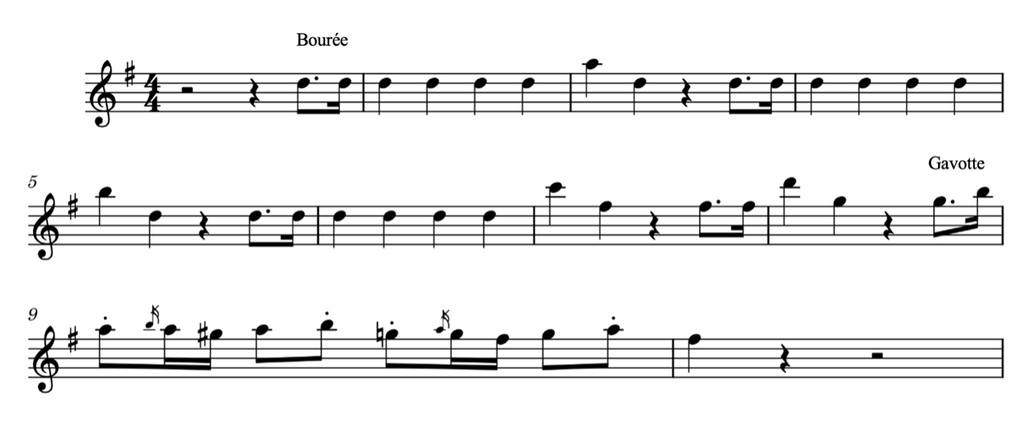
Example 1 Act 1, scene 2, Duet “Cinque . . . dieci . . . venti . . . ,” mm. 1–7 of violin 1. This and all subsequent examples are drawn from Wolfgang Amadeus Mozart, Le nozze di Figaro (Mozarts Werke; Breitkopf & Härtel, 1786/1879).
Figaro’s psychological dilemma becomes so serious that it ends up messing up his timing and melodic intervals. In measure 36, beat three, Figaro starts singing a measure and a half too early.18 His singing of “cinque” (“five”) also happens to be the “wrong” interval, a perfect fourth (G–D) instead of a perfect fifth (A–D). This continues in measure 38, beat three, when Figaro sings “dieci” another measure and a half too early and with the “wrong notes” (A–D instead of B–G). Effectively, once Figaro begins singing incorrectly, Susanna makes use of his errors to take over his theme. In measure 46, Susanna modulates to A major so Figaro can subsequently have his favorite D-major key in measure 49. In measure 61, Susanna then reintroduces C natural on the D-major chord to form D7 (D–F♯–A–C), which is the V7 of G major, to lead the music back to G major in a gavotte to the end. At this point, Figaro is satisfied because Susanna gave him time in D major.19 The cause of the tension that serves as an undercurrent in this scene is due to the fact that the Count, who has control over Susanna and Figaro, has threatened to have legal sexual relations with Susanna on her wedding night (the droit de seigneur). Although Susanna did not show stress during this time as did Figaro, it is clear that the tension was there for both of them.
Both dances featured in this scene, the bourrée and the gavotte, are duple-time dances. The former is in 4/4 time, with a moderate to lively tempo, and is unique in that it starts with a quarter-note pick-up. The latter, also in 4/4 time, starts on beat three with a moderately strong beat. Beat four occurs with similar strength, and then beat one is the strongest. Effectively, this dance has only one weak beat: beat two. The choice to use these two “Baroque” dances at the beginning of the opera makes sense, because the Count still has power over Figaro, symbolizing that the aristocratic regime is still ongoing.
“Se vuol ballare”
This aria is where Figaro attempts to wrest power back from the Count by satirizing the Count’s music (see figure 2). The section begins as a minuet in F major (see example 2). Figaro modulates to the dominant before returning to the tonic for the Presto section which is a contredanse. This is where Figaro launches his attacks on the Count. Note that the contredanse Mozart uses in this section implies that Figaro has traversed into the Count’s aristocratic territory to knock him down. When the section is over, the minuet returns, abridged, back in F major, until it ends.
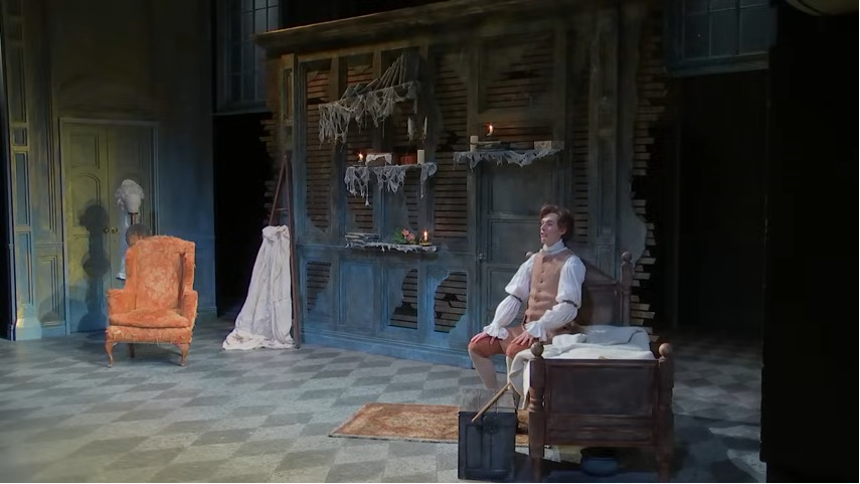
Figure 2 Figaro sings “Se vuol ballare.” Still from “Sir Thomas Allen Directs,” 13:15.
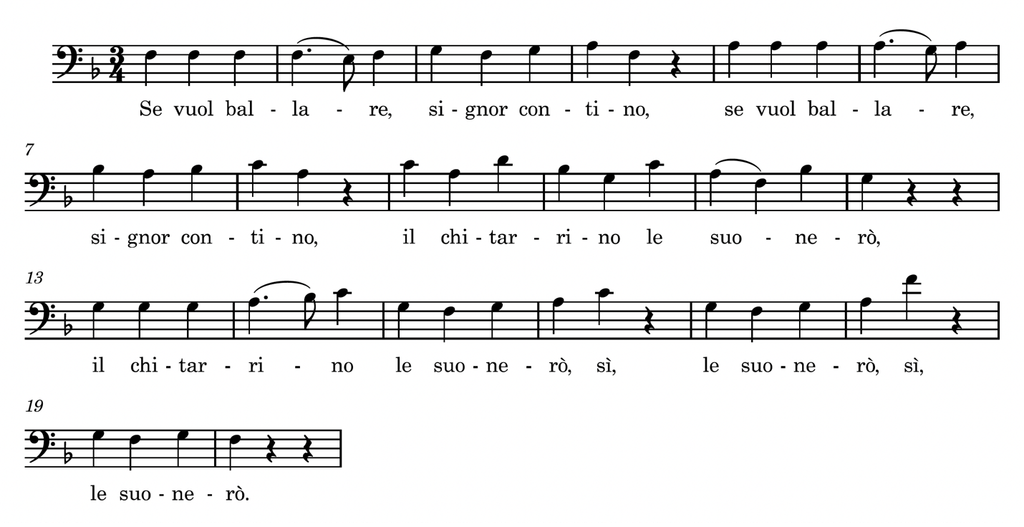
Example 2 Act 1, scene 2, Cavatina “Se vuol ballare,” mm. 1–20 of Figaro’s line (beginning of first A section)
“Non più andrai”
This is the final scene in act 1 of the opera (figure 3).20 Cherubino, a page in Almaviva’s castle, loves Susanna. When the Count finds this out, he decides to banish him, as Cherubino would be another obstacle to the Count’s access to Susanna. This scene consists of a 2/4 contredanse and a 4/4 march which alternates. Figaro wants to make Cherubino feel better after the latter was banished by the Count from the castle to go to war. Figaro sings an aria for Cherubino which features consolation, fatherly advice, and encouragement, as well as teasing. “Non più andrai” describes a coming-of-age moment for a dreamy adolescent, sung by his loving but pragmatic “older brother.”
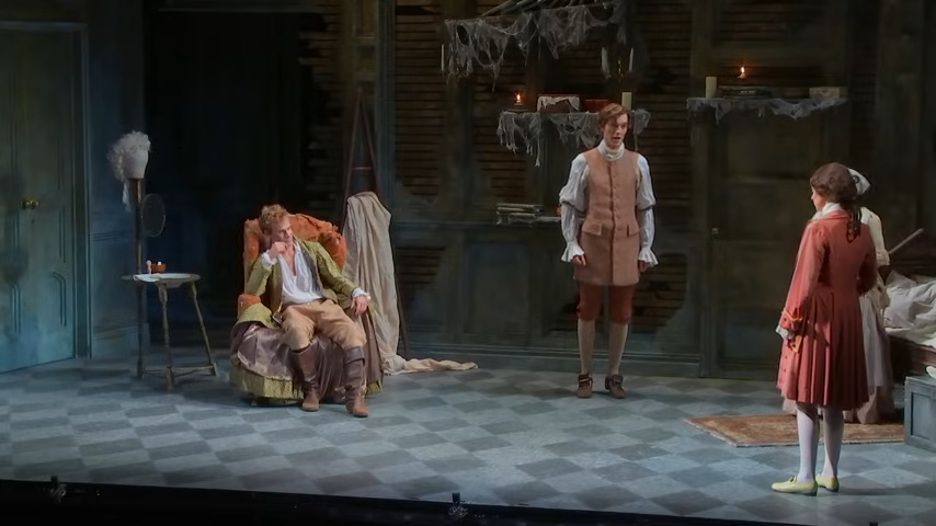
Figure 3 Figaro singing “Non più andrai” for Cherubino at the end of act 1. Still from “Sir Thomas Allen Directs,” 44:03.
The C-major aria is in a rondo form. While the main (repeated) section and the first episode have Figaro describe Cherubino as he is now, the other sections present him as he will be on the field of battle. The main section goes:
Non più andrai, farfallone amoroso,
notte e giorno d’intorno girando;
delle belle turbando il riposo,
Narcisetto, Adoncino d’amor.Non più avrai questi bei pennacchini,
quel cappello leggero e galante,
quella chioma, quell’aria brillante,
Que! vermiglio, donnesco color.No more, you amorous butterfly,
will you go fluttering round by night and day,
disturbing the peace of every maid,
you pocket Narcissus, you Adonis of love.No more will you have those fine feathers,
that light and dashing cap,
those curls, those airs and graces,
that roseate womanish color.21
The first stanza is a march in 4/4 time with a dotted upbeat (actually it is a 2/4 contredanse, the “odd” duple-time waltz mentioned earlier). The music consists almost solely of C-major triads, with a rousing military fanfare set to “delle belle turbando il riposo” (“disturbing the peace of every maid”), a musical mixed metaphor which becomes a large and important section for both the aria and the entire opera (see mm. 5–7 of example 3). Figaro alternates a gavotte rhythm with the orchestra’s march. At the end of the episode, the gavotte quickly dissolves into a dominant pedal, which brings back the original march theme. After its second appearance, Figaro begins a much longer second episode, starting with the description of Cherubino, ending with the same dominant pedal. He ends the piece with the march and an additional coda. The coda is where the orchestral accompaniment is brought to life as a real military march. While the entire orchestra plays, including the timpani for the first time, Figaro imitates a trumpet voicing battle calls.
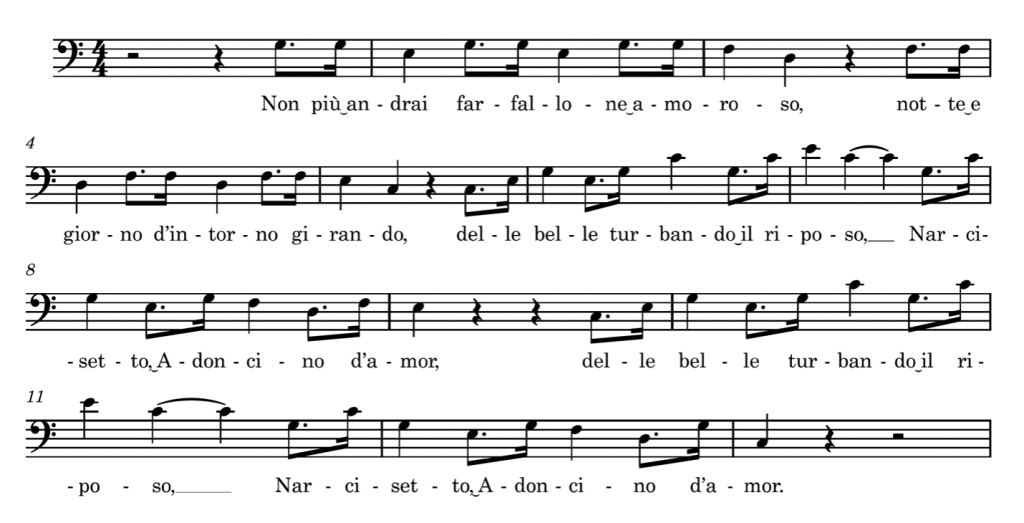
Example 3 Act 1, scene 8, “Non più andrai,” mm. 1–13 (first stanza) of Figaro’s line
The gavotte is a continuation of the dance used for Figaro early in the opera, in the opening scene. The march, yet another Baroque dance style in duple time, is doubly appropriate here. First, as mentioned above, it is supposed to symbolize a military march, because Cherubino has been sent to war. Second, and possibly more importantly, it once again shows the Count wielding his aristocratic power.
“Riconosci in questo amplesso”
“Riconosci in questo amplesso” is the final scene of the act 2 finale.22 It features the arrival of Marcellina, Basilio, and Bartolo to request the Count’s help in forcing Figaro to marry Marcellina instead of Susanna. Before performing a close reading of this scene, I will provide an overview of the act 2 finale as a whole.
This finale is widely regarded as Mozart’s single best piece of dramatic composition across all of his operas. It is a very entertaining section, full of dramatic turns and action. On top of that, it combines a variety of different comic moments into a live commedia pushing the buffa boundaries, and represents the nature of true nobility, friendship, and loyalty.
The act 2 finale consists of four “waves,” featuring eight dances in total. Plotwise, they alternate between introductions of crises, resolutions, and triumphs. Wave 1 consists of a 4/4 march in E-flat major introducing a crisis, a resolutionary 3/8 minuet in B-flat major, and a triumphant 4/4 Allegro also in B-flat major. Wave 2 consists of a 3/8 passepied in G major where Figaro enters and a 2/4 gavotte in C major where a crisis is introduced and promptly resolved. Wave 3 consists of a dance unique to buffa called “buffa figures” in 4/4 time in F major where another crisis is presented and its resolution is a gigue in B-flat major in 6/8 time. Wave 4 is a march in 4/4 time in E-flat major where yet another crisis is introduced and resolved.
The form of the finale could also be analyzed paradigmatically as a sonata. Looking at the key structure of the four waves, we can consider wave 1 as an exposition. The march would be the main theme in the tonic key, E-flat major, and its last four measures starting with the pick-up would be a (mini) transition from I to V, and the minuet and Allegro would be the subordinate theme group consisting of two dances. Wave 2 and wave 3, combined, form the development section. It consists of a variety of key changes throughout the four dances. Not only that, but if one observes closely, there is a descending circle of fifths in terms of key modulations. It starts with the passepied in G major, which is V of the C-major gavotte, which is V of the F-major buffa figures, which is V of the B-flat major gigue. This happens to match the fact that most development sections stand on the dominant near their ends as well before returning to the tonic key for the recapitulation. Wave 4 would be the recapitulation consisting of solely the 4/4 march in the tonic key E-flat major, albeit it is truncated without the return of the transition, the subordinate theme group, and the coda.
Mozart has made some interesting dance selections in the act 2 finale. First, note the presence of triple-meter dances. As this is halfway through the opera, where the aristocracy is starting to lose its power and the lower classes are beginning to gain it, this makes sense. Looking closer, though, these triple-meter dances come at specific situations. Most of them appear at the resolution of a crisis. For example, the 3/8 passepied appears when Figaro enters the scene (Figaro symbolizing the challenge to the Count’s power), and the 3/8 gigue appears when the Count destroys the commission he is holding, thereby resolving the central issue.
As mentioned above, “Riconosci in questo amplesso” is a march in 4/4 time in E-flat major. It begins with a relatively weak orchestral entrance while Marcellina, Basilio, and Bartolo speak in asides.23 The Count then destroys the commission in quiet hatred and Susanna shows her relief with a triumphant B-flat major fanfare, building up to a long high F (see figure 4). Despite the general rule against including recitatives in opera finales (or the finales of individual acts as the case may be), Da Ponte and Mozart found a way to provide solos for Marcellina, Bartolo, and Basilio in this act 2 finale. They each have a gavotte accompanied by string flourishes and a dissolution after four measures into buffa patter. Example 4 presents Marcellina’s solo in this scene; Bartolo and Basilio have similar solos. The gavotte rhythms and their dissolution into patter appropriately represent characters whose coarse demeanors belie their somewhat sophisticated appearance.
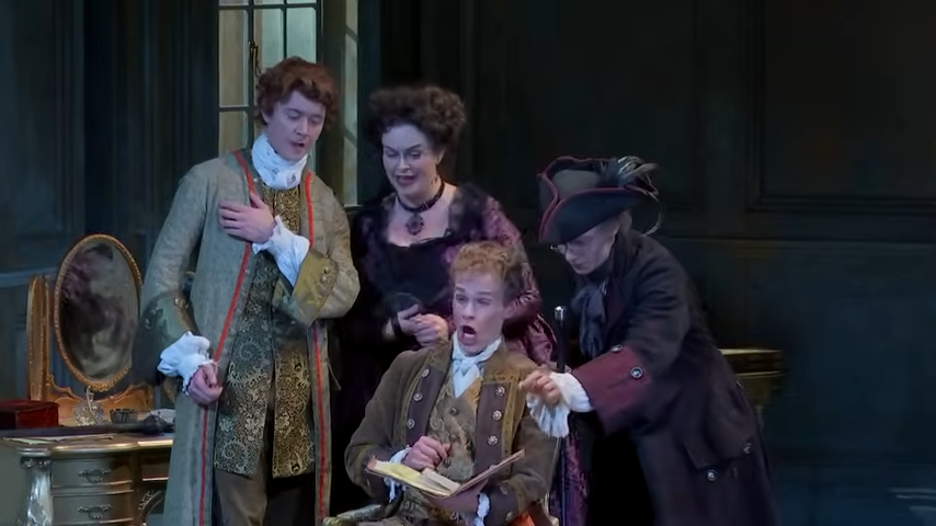
Figure 4 The Count destroys the commission. Still from “Sir Thomas Allen Directs,” 1:35:46.
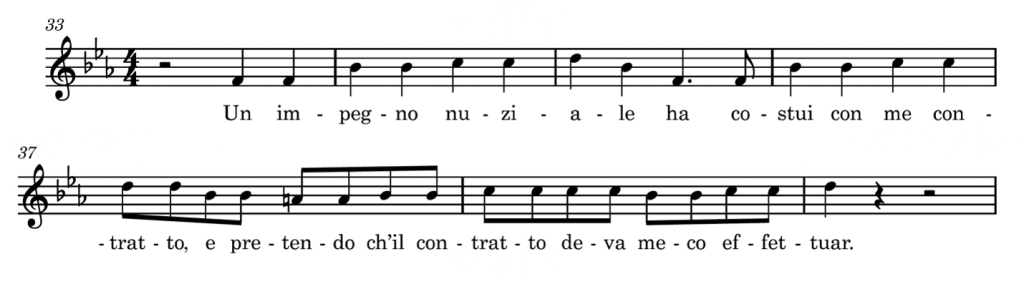
Example 4 Act 2, scene 12, Allegro assai “Voi signor, che giusto siete,” mm. 33–39 of Marcellina’s solo
After the three characters have completed their gavotte solos, Susanna, Figaro, and the Countess, startled, ask questions, and the Count cries “Olà, silenzio: / lo son qui per giudicar” in an alla breve style. This is followed by a Più Allegro section and a Prestissimo section where the conspirators are represented by alla breve cantus-firmus music, which is accompanied by a group of wind instruments lending the slow-moving harmonies an ethereal sound. Meanwhile, Susanna, Figaro, and the Countess sing species counterpoint with syncopation, presenting an elaboration of the cantus firmus of the other characters. This sets up the ending where the Italian word “confuse” (son confusa) is sung sorrowfully by the conspirators.24 It is interesting that Susanna, Figaro, and the Countess sing species counterpoint here. This could be explained by their using the Count’s tactics against him successfully.
“Ecco la marcia”
The act 3 finale begins with more “real” music, featuring an approaching band of castle musicians.25 The band arrives in the nick of time to save Figaro from another predicament: Antonio and the Count are pressuring him to admit to his lie about jumping from a window, which would make Figaro himself and his coconspirators look guilty. The march arrives independently of and is not influenced or controlled by any of the characters. By the end of the finale, the heroes take advantage of the march, and the march music and dance form become part of the opera’s larger message.
This beautiful march consists of two reprises, in the form II–I–I–II, where the second reprise begins on the dominant (G major) and ends on the tonic (C major), while the opposite holds for the first reprise. Starting the march in medias res on the dominant may seem odd, but according to Wye Jamison Allanbrook, it works well because it symbolizes the band of musicians coming from afar.26 My favorite musical aspect of this march involves the turns played by the oboes (first at mm. 9–10) and then the bassoons (mm. 12–13) (which appear throughout the march).
After the march, two girls (unnamed) begin singing a C-major contredanse melody. They are accompanied by a full orchestra, albeit with a piano dynamic. This contredanse is actually covering a march, which becomes prominent when the duet moves to the dominant (G major). This occurs easily because doubling the contredanse rhythm of quarter notes results in the march rhythm of eighth notes. After the march concludes, the contredanse returns with the A section in the tonic. However, the march feature returns for the sixteen-measure ending of the duet. The repeated chord progression is I–[V4/2]→IV6–V7–I, etc.
The use of the march and contredanse in this section is totally fitting. As the former is from the Baroque era and the latter is a dance shared between Baroque and galant styles, they remind the audience that the aristocratic class still has power and that the opera is not yet over (as the audience probably had an idea of how the opera would end as they likely had program notes). Similarly, the fandango had become associated with the Spanish aristocracy by the eighteenth century, which may explain why this dance appears in a couple of beautiful scenes in Figaro. The first is toward the beginning when Susanna tosses her bouquet of flowers up in the air (during example 4 above; see also figure 5 below), and the second is just a few seconds later when the dance begins in earnest (example 5; see also figure 6 below). The former was not originally in the score or libretto, it is a dramaturgical choice made by the Royal College of Music in their rendition of this opera. Allanbrook believes that the use of the fandango is a distraction from schemes that are occurring beneath.27 During the fandango, the Count reads a note from Susanna while Figaro cynically observes him. In my own opinion, however, the fandango might be Mozart and Da Ponte’s idea for the audience to possibly stand up and dance for a bit after about two hours of intense opera, a “mini intermission,” if you will. The fandango ends with a return of the sixteen-measure march finale, with the same chord progression mentioned above.
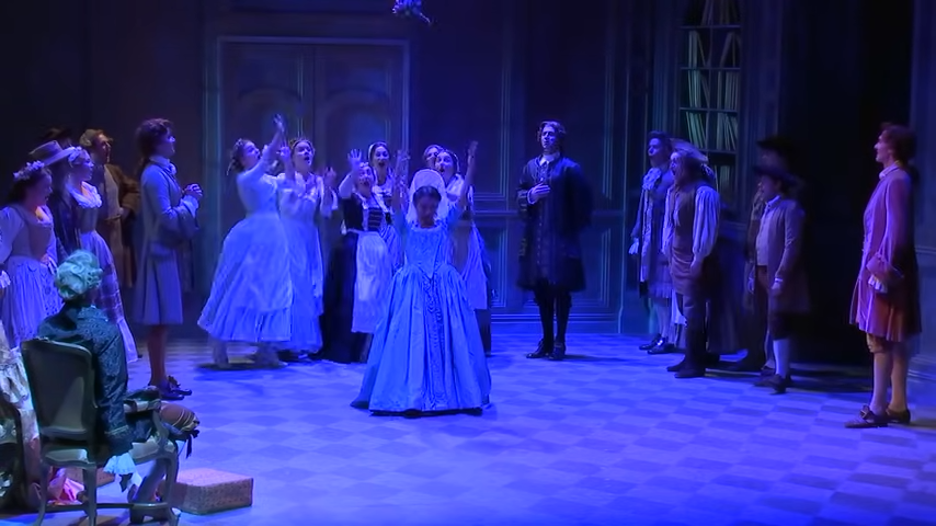
Figure 5 Susanna tosses her bouquet of flowers in the air. Still from “Sir Thomas Allen Directs,” 2:16:22.
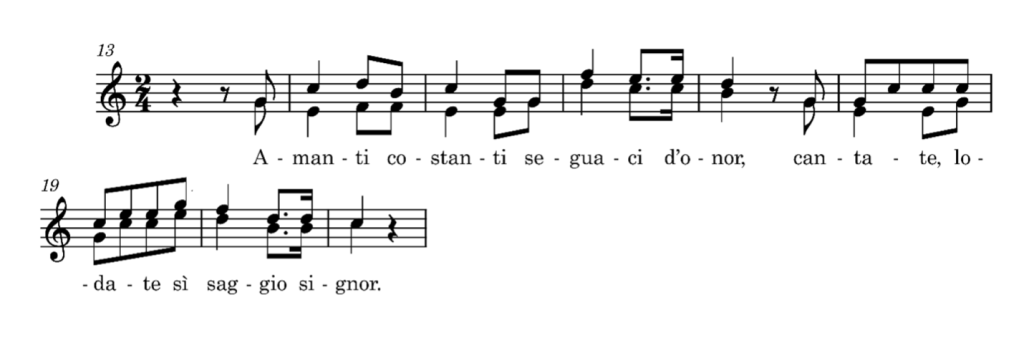
Example 5 Act 3, scene 14, Allegretto, mm. 13–21 of contredanse duet
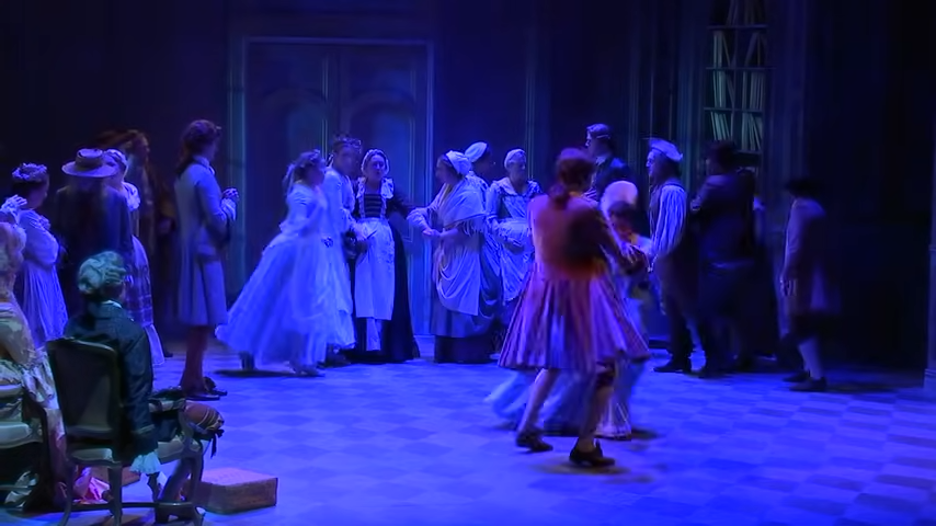
Figure 6 The fandango begins. Still from “Sir Thomas Allen Directs,” 2:16:27.
Act 4 Finale
The finale of act 4 consists of three sections, each containing two movements, totaling six movements in all.28 The drama’s events are more public and are less intense; instead, reconciliation is at their core. The characters are aware of their roles as they share in winding down the comedy. The keys of the finale are grouped into pairs. The first piece of the first pair is in D major, and the second piece is in G major. Both pieces of the first section are gavottes in duple time and resound in a public setting; that is, where all the characters can be observed seeing the dances. The first piece of the second pair is in E-flat major while the second is in B-flat major. Both of these pieces are pastorales in triple time in a private setting, where only the characters in the dance are observed. Although these pastorales are not dance forms themselves, their rhythm and pace mimic the siciliano, which is a dance form Mozart used throughout his lifetime, such as in his Siciliano in D minor, K15u. It was so commonly used in Mozart’s time that it was classified as a dance in method books in the late eighteenth century.29 The first piece of the last pair is in G major while the second is in D major. These pieces are alla breve in duple time in a public setting. Note what we have here in the finale: We have duple-time dances being performed in public settings and triple-time dances being performed in private settings. This could imply that in the public view, the aristocracy still wielded power. Yet in reality, the power was in the hands of the people, even though this was evident more in private settings.
In conclusion, Le nozze di Figaro features a variety of dance styles that were popular in the Age of the Enlightenment. Some of these dances were from the “learned” style associated with the Baroque era, such as the march, bourrée, and gavotte. Others come from the galant style, such as the passepied and the gigue. The specific dances Mozart chose to present at different points throughout the opera tell us something about the social status of the characters represented at corresponding narrative junctures (i.e., when the aristocracy is dominant, duple-meter dances are performed, but when the lower classes lead, triple-meter galant-style dances are played). It would be interesting to study other opera buffa of the time to see if they also feature a variety of dance styles.
- Otto Erich Deutsch, Mozart: A Documentary Biography, 2nd ed. (Simon & Schuster, 1990), 272.↗
- Deutsch, 272.↗
- Deutsch, 274.↗
- Wye Jamison Allanbrook, Rhythmic Gesture in Mozart: Le nozze di Figaro & Don Giovanni (University of Chicago Press, 1984), 15.↗
- Allanbrook.↗
- Allanbrook, 22.↗
- Allanbrook, 32.↗
- Allanbrook, 32–33.↗
- David Lewin, “Figaro’s Mistakes,” Current Musicology 57 (1995): 45.↗
- Lewin, 47.↗
- Lewin.↗
- Lewin.↗
- Translation drawn from Wolfgang Amadeus Mozart, Le nozze di Figaro (Mozarts Werke; Breitkopf & Härtel, 1786/1879) (hereafter Mozart, Figaro).↗
- Lewin, “Figaro’s Mistakes,” 48.↗
- Lewin, 48.↗
- Allanbrook, Rhythmic Gesture, 75–76.↗
- Lewin, “Figaro’s Mistakes,” 50.↗
- Lewin.↗
- Lewin, 52–54.↗
- Musical discussion in this section is informed by Allanbrook, Rhythmic Gesture, 93–95.↗
- “Non più andrai,” Opera Arias Composers Singers, accessed July 18, 2026, https://www.opera-arias.com/mozart/le-nozze-di-figaro/non-piu-andrai/.↗
- Musical discussion in this section is informed by Allanbrook, 119.↗
- What remains of this section is informed by Allanbrook, 133–36.↗
- Mozart, Figaro, 210–12.↗
- Musical discussion in this section is informed by Allanbrook, 149–54.↗
- Allanbrook, 149.↗
- Allanbrook, 154.↗
- Musical discussion in this section is informed by Allanbrook, 174–86.↗
- Allanbrook, 43.↗